Amateur ’Grammatics

There is much more to mathematics than mathematics. Like a tree, it has deep roots. Like a tree, it’s affected by its environment. Philosophy of mathematics is concerned with the roots. Psychology of mathematics is concerned with the environment.

On Planet Earth, the environment is human beings. What attracts men and women to the subject? What makes them good or bad at it?And so on. One interesting answer to the first question was supplied by the mathematician Stanislaw Ulam (1909-84), who wrote this in his autobiography:

“In many cases, mathematics is an escape from reality. The mathematician finds his own monastic niche and happiness in pursuits that are disconnected from external affairs. Some practice it as if using a drug.” – Adventures of a Mathematician (1983)

That’s certainly part of maths’ appeal to me: as an escape from reality, or an escape from one reality into another (and deeper). Real life is messy. Maths isn’t, unless you want it to be. But you can find parallels between maths and real life too. In real life, people collect things that they find attractive or interesting: stamps, sea-shells, gems, cigarette-cards, beer-cans and so on. You can collect things in maths too: interesting numbers and number patterns. Recreational maths can feel like looking on a beach for attractive shells and pebbles.

Here’s a good example: digital anagrams, or numbers in different bases whose digits are the same but re-arranged. For example, 13 in base 10 equals 31 in base 4, because 13 = 3 * 4 + 1. To people with the right kind of mind, that’s an interesting and attractive pattern. There are lots more anagrams like that:

1045 = 4501 in base 6
1135 = 5131 in base 6

23 = 32 in base 7
46 = 64 in base 7

1273 = 2371 in base 8
1653 = 3165 in base 8

158 = 185 in base 9
227 = 272 in base 9

196 = 169 in base 11
283 = 238 in base 11

2193 = 1329 in base 12
6053 = 3605 in base 12

43 = 34 in base 13
86 = 68 in base 13

But triple anagrams, involving three bases, seem even more attractive:

913 = 391 in base 16 = 193 in base 26
103462 = 610432 in base 7 = 312046 in base 8
245183 = 413285 in base 9 = 158234 in base 11

And that’s just looking in base 10. If you include all bases, the first double anagram is in fact 21 in base 3 = 12 in base 5 (equals 7 in base 10). The first triple anagram is this:

2C1 in base 13 = 1C2 in base 17 = 12C in base 21 (equals 495 in base 10)

But are there quadruple anagrams, quintuple anagrams and higher? I don’t know. I haven’t found any and it gets harder and harder to search for them, because the bigger n gets, the more bases there are to check. However, I can say one thing for certain: in any given base, anagrams eventually disappear.

To understand why, consider the obvious fact that anagrams have to have the same number of digits in different bases. But the number of digits is a function of the powers of the base. That is, the triple anagram 103462 (see above) has six digits in bases 7, 8 and 10 because 7^5 < 103462 < 7^6, 8^5 < 103462 < 8^6 and 10^5 < 103462 < 10^6. Similarly, the triple anagram 245183 (ditto) has six digits in bases 9, 10 and 11 because 9^5 < 245183 < 9^6, 10^5 < 245183 < 10^6 and 11^5 < 245183 < 11^6:

7^5 < 103462 < 7^6
16807 < 103462 < 117649
8^5 < 103462 < 8^6
32768 < 103462 < 262144
10^5 < 103462 < 10^6
100000 < 103462 < 1000000
9^5 < 245183 < 9^6
59049 < 245183 < 531441
10^5 < 245183 < 10^6
100000 < 245183 < 1000000
11^5 < 245183 < 11^6
161051 < 245183 < 1771561

In other words, for some n the number-lengths of bases 7 and 8 overlap the number-lengths of base 10, which overlap the number-lengths of bases 9 and 11. But eventually, as n gets larger, the number-lengths of base 10 will fall permanently below the number-lengths of bases 7, 8 and 9, just as the number-lengths of base 11 will fall permanently below the number-lengths of base 10.

To see this in action, consider the simplest example: number-lengths in bases 2 and 3. There is no anagram involving these two bases, because only two numbers have the same number of digits in both: 1 and 3 = 11 in base 2 = 10 in base 3. After that, n in base 2 always has more digits than n in base 3:

2^0 = 1 in base 2 (number-length=1) = 1 in base 3 (l=1)
2^1 = 2 = 10 in base 2 (number-length=2) = 2 in base 3 (l=1)
2^2 = 4 = 100 in base 2 (l=3) = 11 in base 3 (l=2)
2^3 = 8 = 1000 in base 2 = 22 in base 3 (l=2)
2^4 = 16 = 10000 in base 2 = 121 in base 3 (l=3)
2^5 = 32 = 1012 in base 3 (l=4)
2^6 = 64 = 2101 in base 3 (l=4)
2^7 = 128 = 11202 in base 3 (l=5)
2^8 = 256 = 100111 in base 3 (l=6)
2^9 = 512 = 200222 in base 3 (l=6)
2^10 = 1024 = 1101221 in base 3 (l=7)

Now consider bases 3 and 4. Here is an anagram using these bases: 211 in base 3 = 112 in base 4 = 22. There are no more anagrams and eventually there’s no more chance for them to occur, because this happens as n gets larger:

3^0 = 1 in base 3 (number-length=1) = 1 in base 4 (l=1)
3^1 = 3 = 10 in base 3 (number-length=2) = 3 in base 4 (l=1)
3^2 = 9 = 100 in base 3 (l=3) = 21 in base 4 (l=2)
3^3 = 27 = 1000 in base 3 (l=4) = 123 in base 4 (l=3)
3^4 = 81 = 10000 in base 3 (l=5) = 1101 in base 4 (l=4)
3^5 = 243 = 100000 in base 3 (l=6) = 3303 in base 4 (l=4)
3^6 = 729 = 23121 in base 4 (l=5)
3^7 = 2187 = 202023 in base 4 (l=6)
3^8 = 6561 = 1212201 in base 4 (l=7)
3^9 = 19683 = 10303203 in base 4 (l=8)
3^10 = 59049 = 32122221 in base 4 (l=8)
3^11 = 177147 = 223033323 in base 4 (l=9)
3^12 = 531441 = 2001233301 in base 4 (l=10)
3^13 = 1594323 = 12011033103 in base 4 (l=11)
3^14 = 4782969 = 102033231321 in base 4 (l=12)
3^15 = 14348907 = 312233021223 in base 4 (l=12)
3^16 = 43046721 = 2210031131001 in base 4 (l=13)
3^17 = 129140163 = 13230220113003 in base 4 (l=14)
3^18 = 387420489 = 113011321011021 in base 4 (l=15)
3^19 = 1162261467 = 1011101223033123 in base 4 (l=16)
3^20 = 3486784401 = 3033311001232101 in base 4 (l=16)

When n is sufficiently large, it always has fewer digits in base 4 than in base 3. And the gap gets steadily bigger. When n doesn’t have the same number of digits in two bases, it can’t be an anagram. A similar number-length gap eventually appears in bases 4 and 5, but the anagrams don’t run out as quickly there:

103 in base 5 = 130 in base 4 = 28
1022 in base 5 = 2021 in base 4 = 137
1320 in base 5 = 3102 in base 4 = 210
10232 in base 5 = 22310 in base 4 = 692
10332 in base 5 = 23031 in base 4 = 717
12213 in base 5 = 32211 in base 4 = 933
100023 in base 5 = 301002 in base 4 = 3138
100323 in base 5 = 302031 in base 4 = 3213
102131 in base 5 = 311120 in base 4 = 3416
102332 in base 5 = 312023 in base 4 = 3467
103123 in base 5 = 313102 in base 4 = 3538
1003233 in base 5 = 3323010 in base 4 = 16068

Base 10 isn’t exempt. Eventually it must outshrink base 9 and be outshrunk by base 11, so what is the highest 9:10 anagram and highest 10:11 anagram? I don’t know: my maths isn’t good enough for me to find out quickly. But using machine code, I’ve found these large anagrams:

205888888872731 = 888883178875022 in base 9
1853020028888858 = 8888888525001032 in base 9
16677181388880888 = 88888888170173166 in base 9

999962734025 = 356099992472 in base 11
9999820360965 = 3205999998606 in base 11
99999993520348 = 29954839390999 in base 11

Note how the digits of n in the lower base are increasing as the digits of n in the higher base are decreasing. Eventually, n in the lower base will always have more digits than n in the higher base. When that happens, there will be no more anagrams.

Some triple anagrams

2C1 in base 13 = 1C2 in base 17 = 12C in base 21 (n=495 = 3^2*5*11)
912 in base 10 = 219 in base 21 = 192 in base 26 (2^4*3*19)
913 in base 10 = 391 in base 16 = 193 in base 26 (11*83)
4B2 in base 15 = 42B in base 16 = 24B in base 22 (n=1067 = 11*97)
5C1 in base 17 = 51C in base 18 = 1C5 in base 35 (n=1650 = 2*3*5^2*11)
3L2 in base 26 = 2L3 in base 31 = 23L in base 35 (n=2576 = 2^4*7*23)
3E1 in base 31 = 1E3 in base 51 = 13E in base 56 (n=3318 = 2*3*7*79)
531 in base 29 = 351 in base 37 = 135 in base 64 (n=4293 = 3^4*53)
D53 in base 18 = 53D in base 29 = 35D in base 37 (n=4305 = 3*5*7*41)
53I in base 29 = 3I5 in base 35 = 35I in base 37 (n=4310 = 2*5*431)
825 in base 25 = 582 in base 31 = 258 in base 49 (n=5055 = 3*5*337)
6S2 in base 31 = 2S6 in base 51 = 26S in base 56 (n=6636 = 2^2*3*7*79)
D35 in base 23 = 5D3 in base 36 = 3D5 in base 46 (n=6951 = 3*7*331)
3K1 in base 49 = 31K in base 52 = 1K3 in base 81 (n=8184 = 2^3*3*11*31)
A62 in base 29 = 6A2 in base 37 = 26A in base 64 (n=8586 = 2*3^4*53)
9L2 in base 30 = 92L in base 31 = 2L9 in base 61 (n=8732 = 2^2*37*59)
3W1 in base 49 = 1W3 in base 79 = 13W in base 92 (n=8772 = 2^2*3*17*43)
G4A in base 25 = AG4 in base 31 = 4AG in base 49 (n=10110 = 2*3*5*337)
J10 in base 25 = 1J0 in base 100 = 10J in base 109 (n=11900 = 2^2*5^2*7*17)
5[41]1 in base 46 = 1[41]5 in base 93 = 15[41] in base 109 (n=12467 = 7*13*137)
F91 in base 29 = 9F1 in base 37 = 19F in base 109 (n=12877 = 79*163)
F93 in base 29 = 9F3 in base 37 = 39F in base 64 (n=12879 = 3^5*53)
AP4 in base 35 = A4P in base 36 = 4AP in base 56 (n=13129 = 19*691)
BP2 in base 36 = B2P in base 37 = 2PB in base 81 (n=15158 = 2*11*13*53)
O6F in base 25 = FO6 in base 31 = 6FO in base 49 (n=15165 = 3^2*5*337)
FQ1 in base 31 = 1QF in base 111 = 1FQ in base 116 (n=15222 = 2*3*43*59)
B74 in base 37 = 7B4 in base 46 = 47B in base 61 (n=15322 = 2*47*163)
He Say, He Sigh, He Sow #34

• Mathematik ist die Wissenschaft von dem, was an sich klar. — Carl Jacobi (1804-51).
  • “Mathematics is the science of that which is clear by itself.” — Carl Jacobi.

Can You Dij It? #1

The most powerful drug in the world is water. The second most powerful is language. But everyone’s on them, so nobody realizes how powerful they are. Well, you could stop drinking water. Then you’d soon realize its hold on the body and the brain.

But you can’t stop using language. Try it. No, the best way to realize the power of language is to learn a new one. Each is a feast with different flavours. New alphabets are good too. The Devanagari alphabet is one of the strongest, but if you want it in refined form, try the phonetic alphabet. It will transform the way you see the world. That’s because it will make you conscious of what you’re already subconsciously aware of.

But “language” is a bigger category that it used to be. Nowadays we have computer languages too. Learning one is another way of transforming the way you see the world. And like natural languages – French, Georgian, Tagalog – they come in different flavours. Pascal is not like Basic is not like C is not like Prolog. But all of them seem to put you in touch with some deeper aspect of reality. Computer languages are like mathemagick: a way to give commands to something immaterial and alter the world by the application of will.

That feeling is at its strongest when you program with machine code, the raw instructions used by the electronics of a computer. At its most fundamental, machine code is simply a series of binary numbers controlling how a computer processes other binary numbers. You can memorize and use those code-numbers, but it’s easier to use something like assembly language, which makes machine-code friendlier for human beings. But it still looks very odd to the uninitiated:

setupnum:
xor ax,ax
xor bp,bp
mov cx,20
clearloop:
mov [di+bp],ax
add bp,2
loop clearloop
ret

That’s almost at the binary bedrock. And machine code is fast. If a fast higher-level language like C feels like flying a Messerschmitt 262, which was a jet-plane, machine-code feels like flying a Messerschmitt 163, which was a rocket-plane. A very fast and very dangerous rocket-plane.

I’m not good at programming languages, least of all machine code, but they are fun to use, quite apart from the way they make you feel as though you’re in touch with a deeper aspect of reality. They do that because the world is mathematics at its most fundamental level, I think, and computer languages are a form of mathematics.

Their mathematical nature is disguised in a lot of what they’re used for, but I like to use them for recreational mathematics. Machine-code is useful when you need a lot of power and speed. For example, look at these digits:

1, 2, 3, 4, 5, 6, 7, 8, 9, 1*, 0*, 1, 1, 1, 2, 1, 3, 1, 4, 1, 5, 1, 6, 1, 7, 1, 8, 1, 9, 2, 0, 2, 1, 2, 2, 2, 3, 2, 4, 2, 5, 2, 6, 2, 7, 2, 8, 2, 9, 3, 0, 3, 1, 3, 2, 3, 3, 3, 4, 3, 5, 3, 6*, 3*, 7, 3, 8, 3, 9, 4, 0, 4, 1, 4, 2, 4…

They’re what the Online Encyclopedia of Integer Sequences (OEIS) calls “the almost natural numbers” (sequence A007376) and you generate them by writing the standard integers – 1, 2, 3, 4, 5, 6, 7, 8, 9, 10, 11, 12, 13… – and then separating each digit with a comma: 1, 2, 3, 4, 5, 6, 7, 8, 9, 1, 0, 1, 1, 1, 2, 1, 3… The commas give them some interesting twists. In a list of the standard integers, the 1st entry is 1, the 10th entry is 10, the 213rd entry is 213, the 987,009,381th entry is 987,009,381, and so on.

But that doesn’t work with the almost natural numbers. The 10th entry is 1, not 10, and the 11th entry is 0, not 11. But the 10th entry does begin the sequence (1, 0). I wondered whether that happened again. It does. The 63rd entry in the almost natural numbers begins the sequence (6, 3) – see the asterisks in the sequence above.

This happens again at the 3105th entry, which begins the sequence (3, 1, 0, 5). After that the gaps get bigger, which is where machine code comes in. An ordinary computer-language takes a long time to reach the 89,012,345,679th entry in the almost natural numbers. Machine code is much quicker, which is why I know that the 89,012,345,679th entry begins the sequence (8, 9, 0, 1, 2, 3, 4, 5, 6, 7, 9):

1, 2, 3, 4, 5, 6, 7, 8, 9, 10, 63, 3105, 43108, 77781, 367573, 13859021, 77911127, 911360799, 35924813703, 74075186297, 89012345679…

And an ordinary computer-language might give you the impression that base 9 doesn’t have numbers like these (apart from the trivial 1, 2, 3, 4, 5, 6, 7, 8, 10…). But it does. 63 in base 10 is a low-hanging fruit: you could find it working by hand. In base 9, the fruit are much higher-hanging. But machine code plucks them with almost ridiculous ease:

1, 2, 3, 4, 5, 6, 7, 8, 10, 570086565, 655267526, 2615038272, 4581347024, 5307541865, 7273850617, 7801234568…

He Say, He Sigh, He Show #33

Apud me omnia fiunt Mathematicè in NaturaRené Descartes (1596-1650).
  • For me, all things in nature occur mathematically. — Correspondence with Martin Mersenne (1640).

The Art Grows Onda

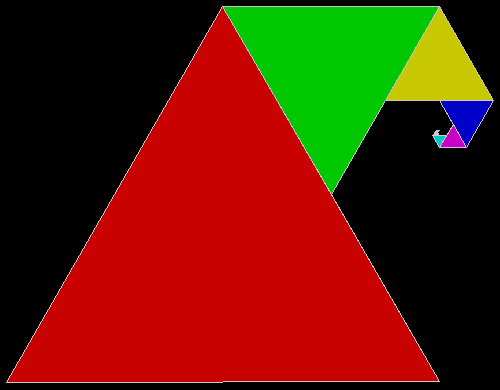
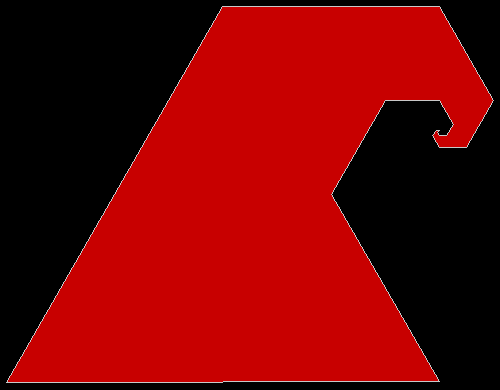
Anyone interested in recreational mathematics should seek out three compendiums by Ian Stewart: Professor Stewart’s Cabinet of Mathematical Curiosities (2008), Professor Stewart’s Hoard of Mathematical Treasures (2009) and Professor Stewart’s Casebook of Mathematical Mysteries (2014). They’re full of ideas and puzzles and are excellent introductions to the scope and subtlety of maths. I first came across Alexander’s Horned Sphere in one of them. I also came across this simpler shape that packs infinity into a finite area:

unicorn_triangle

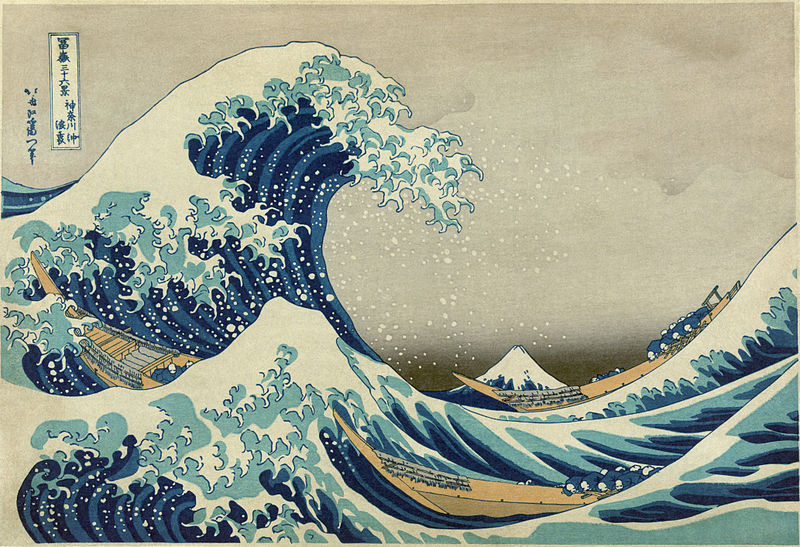
I call it a horned triangle or unicorn triangle and it reminds me of a wave curling over, like Katsushika Hokusai’s The Great Wave off Kanagawa (c. 1830) (“wave” is unda in Latin and onda in Spanish).

The Great Wave off Kanagawa by Katsushika Hokusai (1760–1849)

The Great Wave off Kanagawa by Katsushika Hokusai (1760–1849)

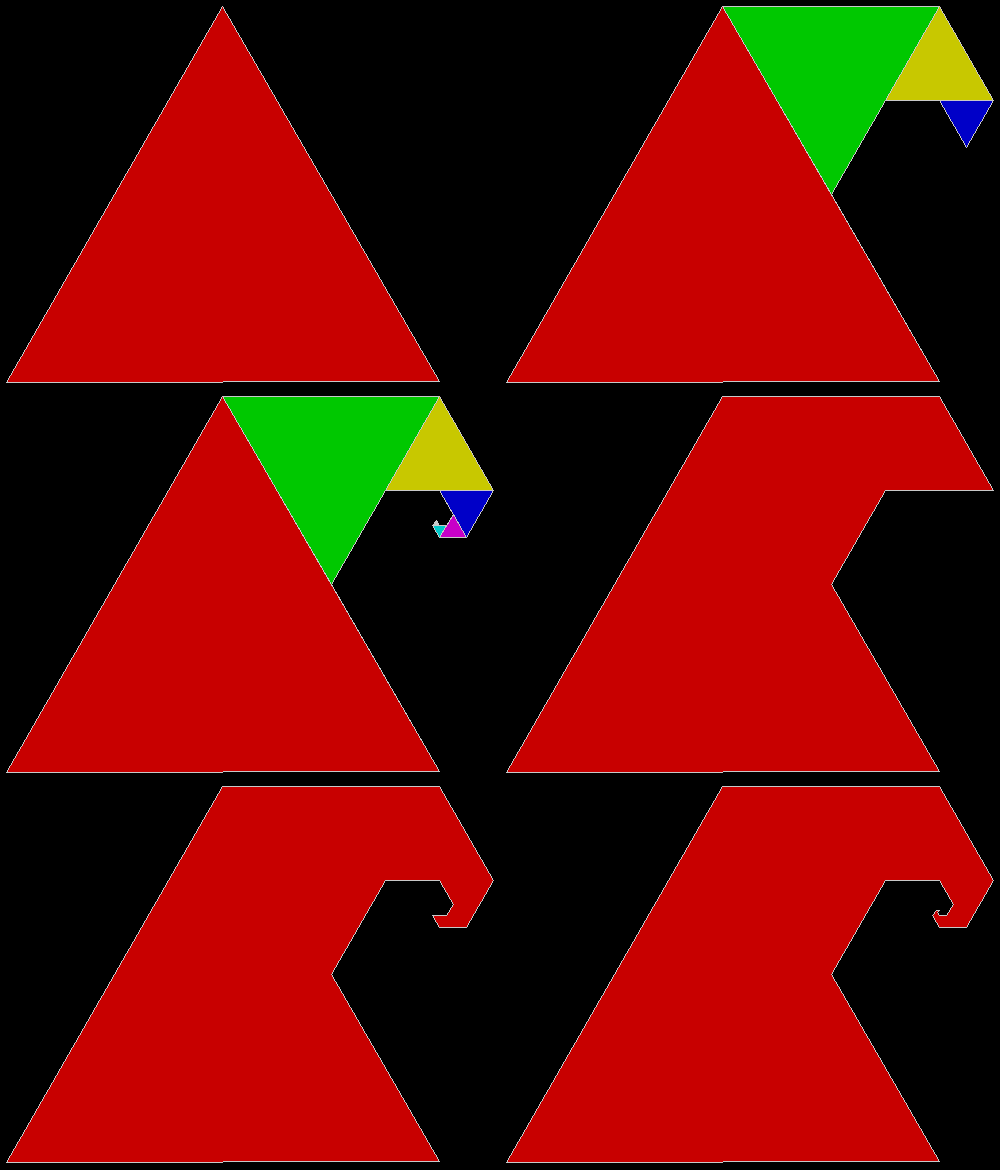
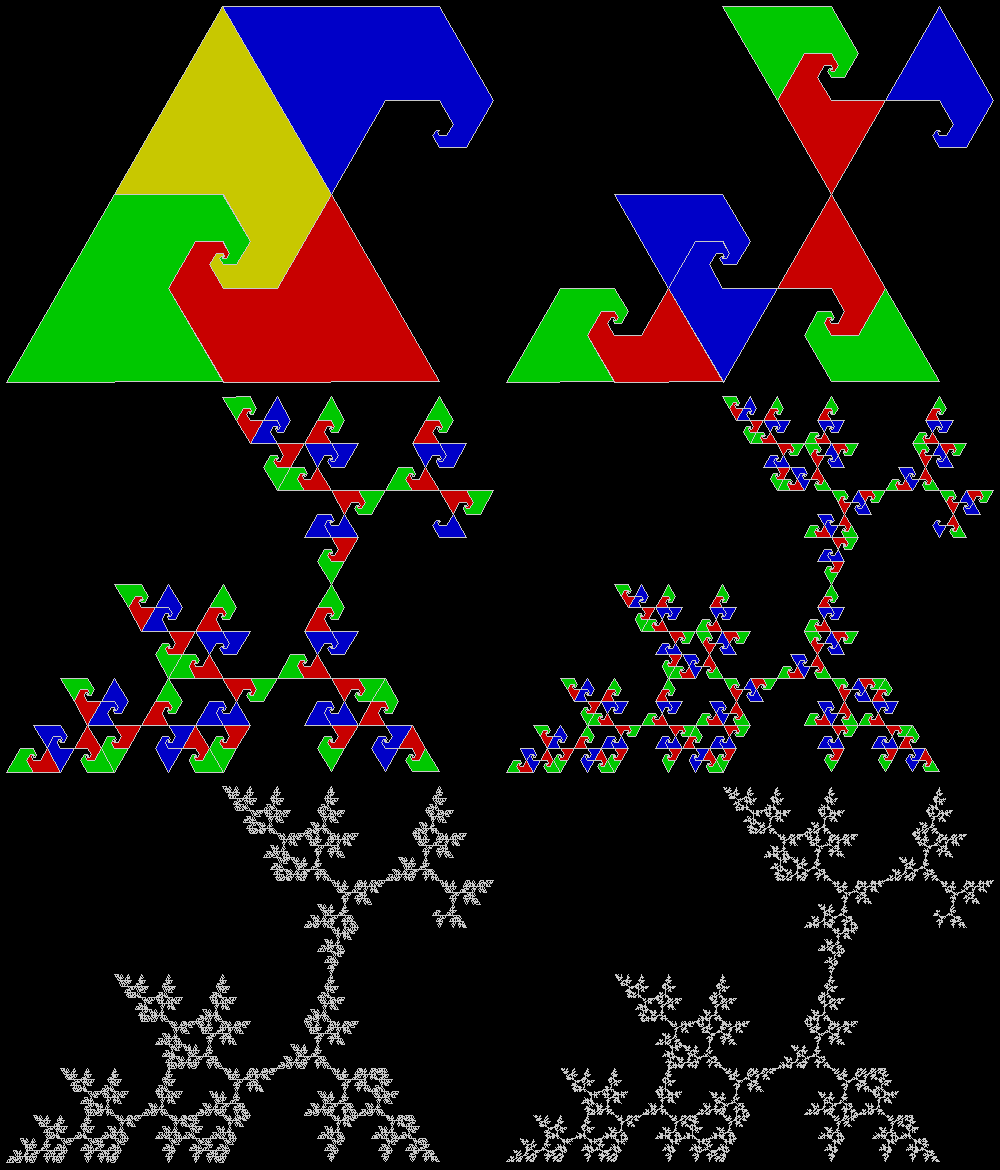
To construct the unicorn triangle, you take an equilateral triangle with sides of length 1 and erect a triangle with sides of length 0.5 on one of its corners. Then on the corresponding corner of the new triangle you erect a triangle with sides of length 0.25. And so on, for ever.

unicorn_multicolor

unicorn_animated

When you double the sides of a polygon, you quadruple the area: a 1×1 square has an area of 1, a 2×2 square has an area of 4. Accordingly, when you halve the sides of a polygon, you quarter the area: a 1×1 square has an area of 1, a 0.5 x 0.5 square has an area of 0.25 or 1/4. So if the original triangle of the unicorn triangle above has an area of 1 rather than sides of 1, the first triangle added has an area of 0.25 = 1/4, the next an area of 0.0625 = 1/16, and so on. The infinite sum is this:

1/4 + 1/16 + 1/256 + 1/1024 + 1/4096 + 1/16384…

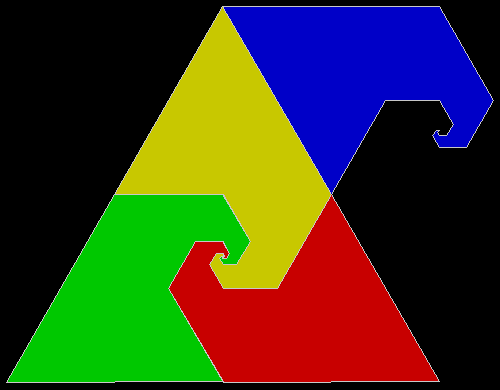
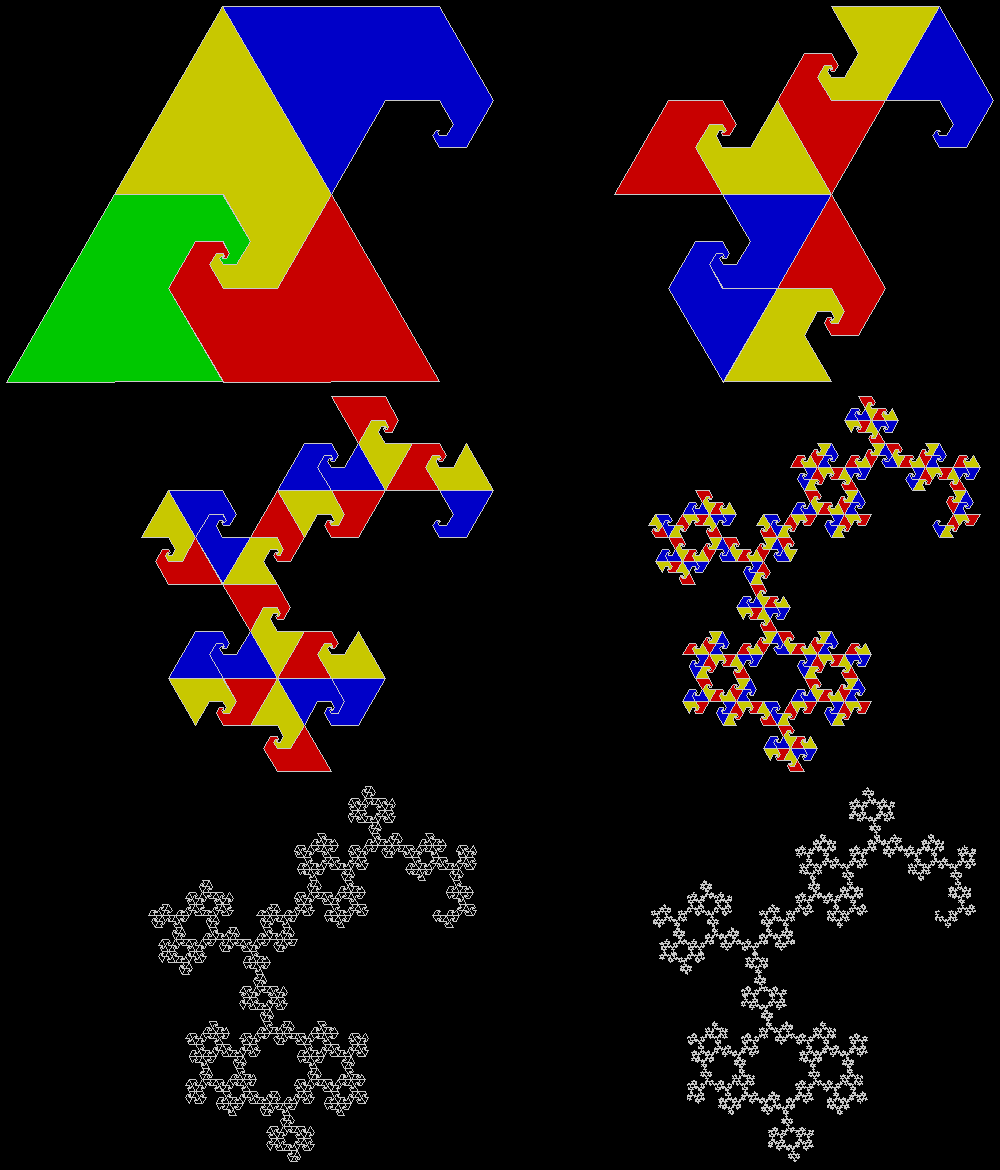
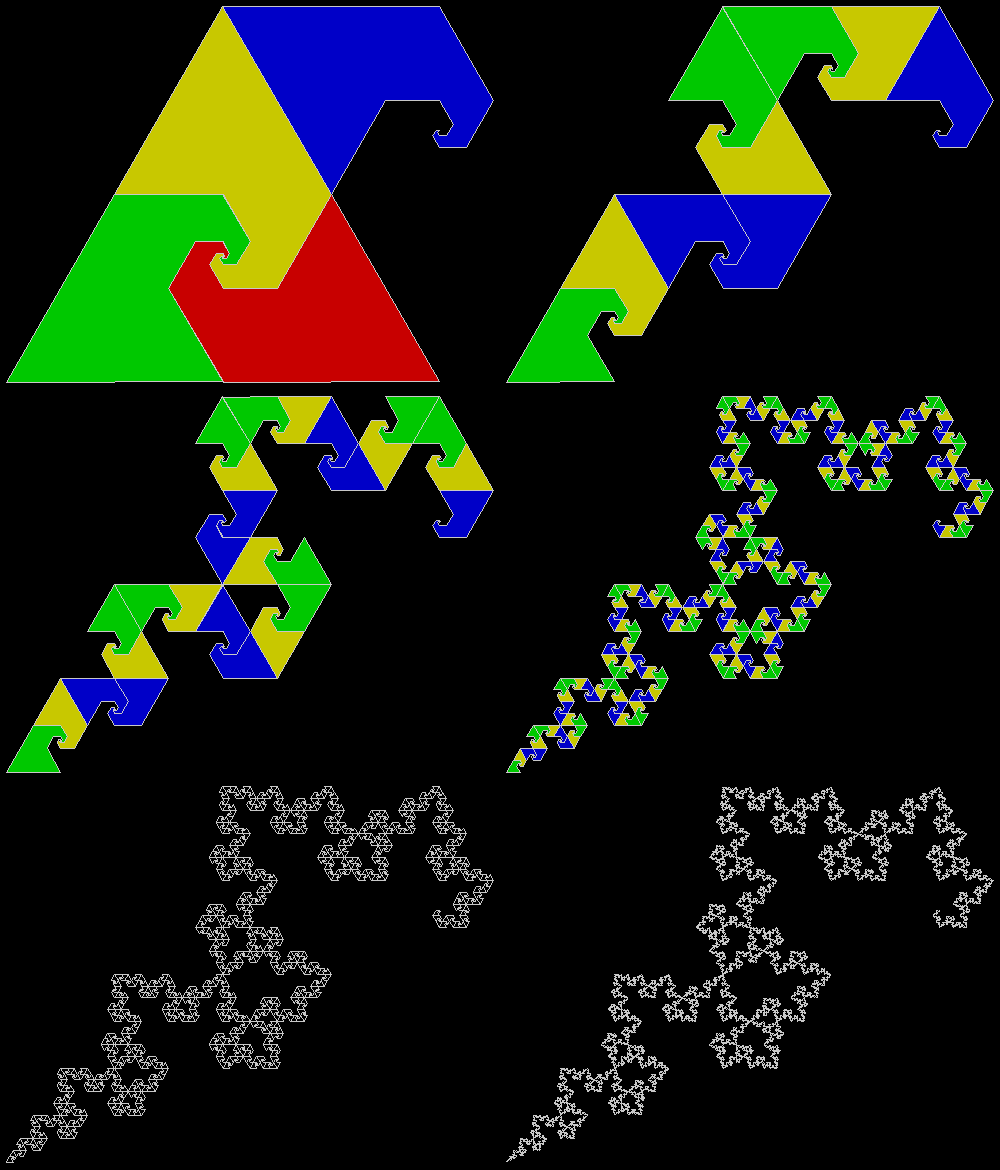
Which equals 1/3. This becomes important when you see the use made of the shape in Stewart’s book. The unicorn triangle is a rep-tile, or a shape that can be divided into smaller copies of the same shape:

unicorn_reptile_static

unicorn_reptile

An equilateral triangle can be divided into four copies of itself, each 1/4 of the original area. If an equilateral triangle with an area of 4 is divided into three unicorn triangles, each unicorn has an area of 1 + 1/3 and 3 * (1 + 1/3) = 4.

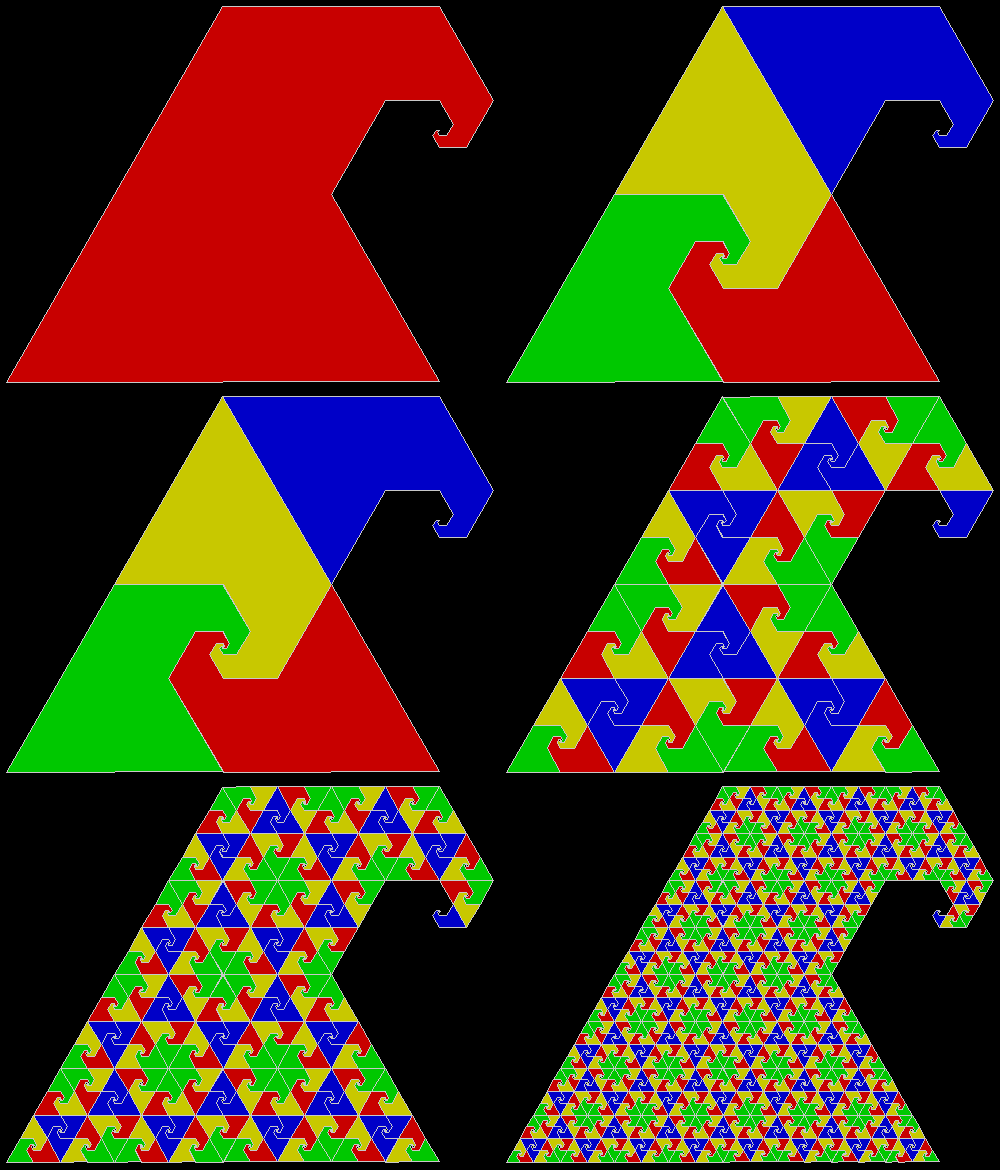
Because it’s a rep-tile, a unicorn triangle is also a fractal, a shape that is self-similar at smaller and smaller scales. When one of the sub-unicorns is dropped, the fractals become more obvious:

unicorn_fractal1


unicorn_fractal2


unicorn_fractal3


Elsewhere other-posted:

Rep-Tiles Revisited

Shareway to Seven

An adaptation of an interesting distribution puzzle from Joseph Degrazia’s Math is Fun (1954):

After a successful year of plunder on the high seas, a pirate ship returns to its island base. The pirate chief, who enjoys practical jokes and has a mathematical bent, hands out heavy bags of gold coins to his seven lieutenants. But when the seven lieutenants open the bags, they discover that each of them has received a different number of coins.

They ask the captain why they don’t have equal shares. The pirate chief laughs and tells them to re-distribute the coins according to the following rule: “At each stage, the lieutenant with most coins must give each of his comrades as many coins as that comrade already possesses.”

The lieutenants follow the rule and each one in turn becomes the lieutenant with most coins. When the seventh distribution is over, all seven of them have 128 coins, the coins are fairly distributed, and the rule no longer applies.

The puzzle is this: How did the pirate captain originally allocate the coins to his lieutenants?


If you start at the beginning and work forward, you’ll have to solve a fiendishly complicated set of simultaneous equations. If you start at the end and work backwards, the puzzle will resolve itself almost like magic.

The puzzle is actually about powers of 2, because 128 = 2^7 and when each of six lieutenants receives as many coins as he already has, he doubles his number of coins. Accordingly, before the seventh and final distribution, six of the lieutenants must have had 64 coins and the seventh must have had 128 + 6 * 64 coins = 512 coins.

At the stage before that, five of the lieutenants must have had 32 coins (so that they will have 64 coins after the sixth distribution), one must have had 256 coins (so that he will have 512 coins after the sixth distribution), and one must have had 64 + 5 * 32 + 256 coins = 480 coins. And so on. This is what the solution looks like:

128, 128, 128, 128, 128, 128, 128
512, 64, 64, 64, 64, 64, 64
256, 480, 32, 32, 32, 32, 32
128, 240, 464, 16, 16, 16, 16
64, 120, 232, 456, 8, 8, 8
32, 60, 116, 228, 452, 4, 4
16, 30, 58, 114, 226, 450, 2
8, 15, 29, 57, 113, 225, 449

So the pirate captain must have originally allocated the coins like this: 8, 15, 29, 57, 113, 225, 449 (note how 8 * 2 – 1 = 15, 15 * 2 – 1 = 29, 29 * 2 – 1 = 57…).

The puzzle can be adapted to other powers. Suppose the rule runs like this: “At each stage, the lieutenant with most coins must give each of his comrades twice as many coins as that comrade already possesses.” If the pirate captain has six lieutenants, after each distribution each of five will have n + 2n = three times the number of coins that he previously possessed. The six lieutenants each end up with 729 coins = 3^6 coins and the solution looks like this:

13, 37, 109, 325, 973, 2917
39, 111, 327, 975, 2919, 3
117, 333, 981, 2925, 9, 9
351, 999, 2943, 27, 27, 27
1053, 2997, 81, 81, 81, 81
3159, 243, 243, 243, 243, 243
729, 729, 729, 729, 729, 729

For powers of 4, the rule runs like this: “At each stage, the lieutenant with most coins must give each of his comrades three times as many coins as that comrade already possesses.” With five lieutenants, each of them ends up with 1024 coins = 4^5 coins and the solution looks like this:

16, 61, 241, 961, 3841
64, 244, 964, 3844, 4
256, 976, 3856, 16, 16
1024, 3904, 64, 64, 64
4096, 256, 256, 256, 256
1024, 1024, 1024, 1024, 1024

For powers of 5, the rule runs like this: “At each stage, the lieutenant with most coins must give each of his comrades four times as many coins as that comrade already possesses.” With four lieutenants, each of them ends up with 625 coins = 5^4 coins and the solution looks like this:

17, 81, 401, 2001
85, 405, 2005, 5
425, 2025, 25, 25
2125, 125, 125, 125
625, 625, 625, 625

Self-Raising Power

The square root of 2 is the number that, raised to the power of 2, equals 2. That is, if r^2 = r * r = 2, then r = √2. The cube root of 2 is the number that, raised to the power of 3, equals 2. That is, if r^3 = r * r * r = 2, then r = [3]√2.

But what do you call the number that, raised to the power of itself, equals 2? I suggest “the auto-root of 2”. Here, if r^r = 2, then r = [r]√2. I don’t know a quick way to calculate the auto-root, but you can adapt a well-known algorithm for approximating the square root of a number. The square-root algorithm looks like this:

n = 2
r = 1
for c = 1 to 20
    r = (r + n/r) / 2
next c
print r

r = 1.414213562…

Note the fourth line of the algorithm: r = (r + n/r) / 2. When r is an over-estimate of √2, then 2/r will be an under-estimate (and vice versa). (r + 2/r) / 2 splits the difference and refines the estimate. Using the lines above as the model, the auto-root algorithm looks like this:

n = 2
r = 1
for c = 1 to 20
    r = (r + [r]√n) / 2[*]
next c
print r

r = 1.559610469…


*This is equivalent to r = (r + n^(1/r)) / 2

Here are the first 100 digits of [r]√2 = r in base 10:

1, 5, 5, 9, 6, 1, 0, 4, 6, 9, 4, 6, 2, 3, 6, 9, 3, 4, 9, 9, 7, 0, 3, 8, 8, 7, 6, 8, 7, 6, 5, 0, 0, 2, 9, 9, 3, 2, 8, 4, 8, 8, 3, 5, 1, 1, 8, 4, 3, 0, 9, 1, 4, 2, 4, 7, 1, 9, 5, 9, 4, 5, 6, 9, 4, 1, 3, 9, 7, 3, 0, 3, 4, 5, 4, 9, 5, 9, 0, 5, 8, 7, 1, 0, 5, 4, 1, 3, 4, 4, 4, 6, 9, 1, 2, 8, 3, 9, 7, 3…

And here is [r]n = r for n = 2..20:

autopower(2) = 1.5596104694623693499703887…
autopower(3) = 1.8254550229248300400414692…
autopower(4) = 2
autopower(5) = 2.1293724827601566963803119…
autopower(6) = 2.2318286244090093673920215…
autopower(7) = 2.3164549587856123013255030…
autopower(8) = 2.3884234844993385564187215…
autopower(9) = 2.4509539280155796306228059…
autopower(10) = 2.5061841455887692562929409…
autopower(11) = 2.5556046121008206152514542…
autopower(12) = 2.6002950000539155877172082…
autopower(13) = 2.6410619164843958084118390…
autopower(14) = 2.6785234858912995813011990…
autopower(15) = 2.7131636040042392095764012…
autopower(16) = 2.7453680235674634847098492…
autopower(17) = 2.7754491049442334313328329…
autopower(18) = 2.8036632456580215496843618…
autopower(19) = 2.8302234384970308956026277…
autopower(20) = 2.8553085030012414128332189…

I assume that the auto-root is always an irrational number, except when n is a perfect power of suitable form, i.e. n = p^p for some integer p. For example, autoroot(4) = 2, because 2^2 = 4, autoroot(27) = 3, because 3^3 = 27, and so on.

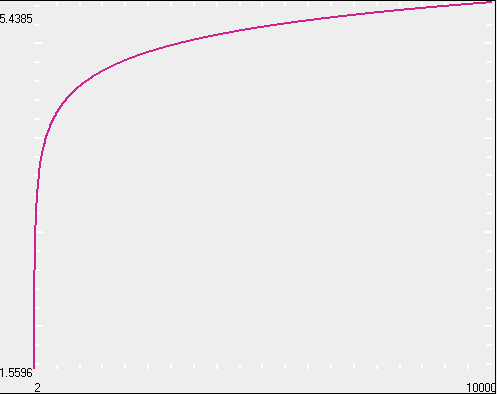
And here is the graph of autoroot(n) for n = 2..10000:
autoroot

Performativizing Papyrocentricity #43

Papyrocentric Performativity Presents:

Avens AboveHarrap’s Wild Flowers: A Guide to the Wild Flowers of Britain & Ireland, Simon Harrap (Bloomsbury 2013)

Place of GladesA Dictionary of British Place-Names, A.D. Mills (Oxford University Press 1991)

De Minimis Curat Rex?Infinitesimal: How a Dangerous Mathematical Theory Shaped the Modern World, Amir Alexander (Oneworld 2014)

Seen and Not HeardThe Greatest Albums You’ll Never Hear, ed. Bruno MacDonald (Aurum Press 2014)


Or Read a Review at Random: RaRaR

Get Your Prox Off

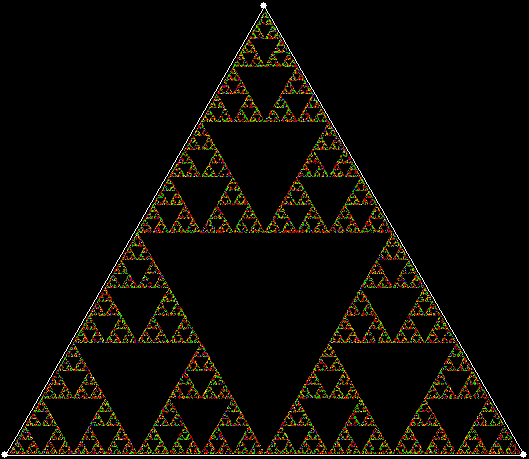
Create a triangle. Find a point somewhere inside it. Choose a corner at random and move halfway towards it. Mark the new point. Repeat the procedure: choose, move, mark. Repeat again and again. In time, a fractal will appear:

siertri

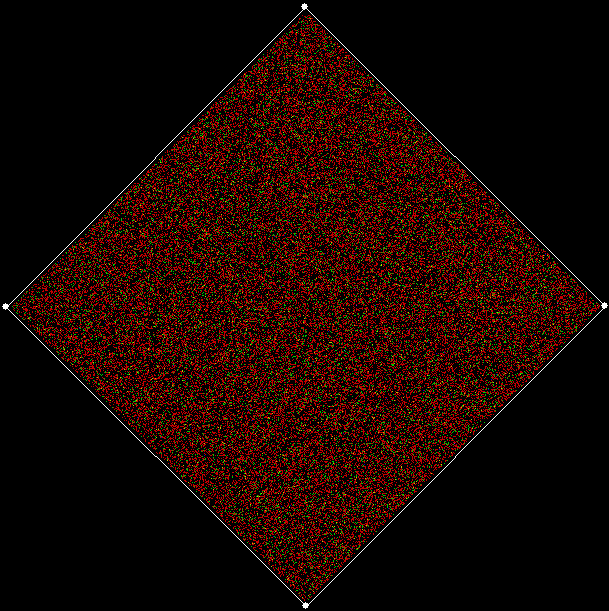
However, if you try the same thing with a square – choose a corner at random, move halfway towards it, mark the new point, repeat – no fractal appears. Instead, the points fill the interior of the square:

sierquad

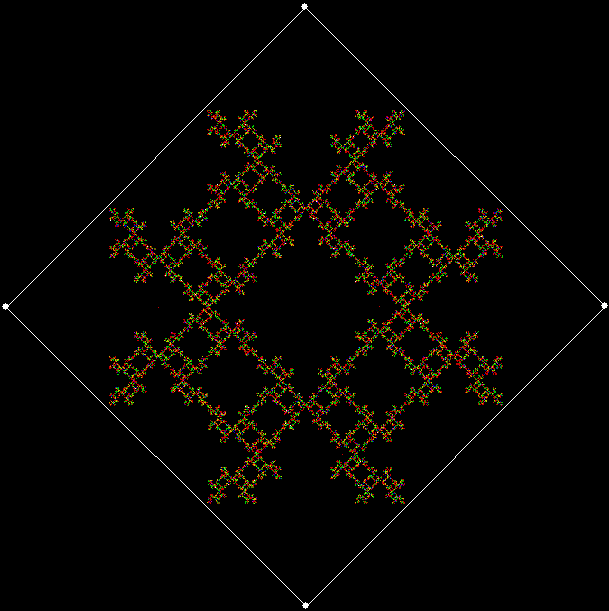
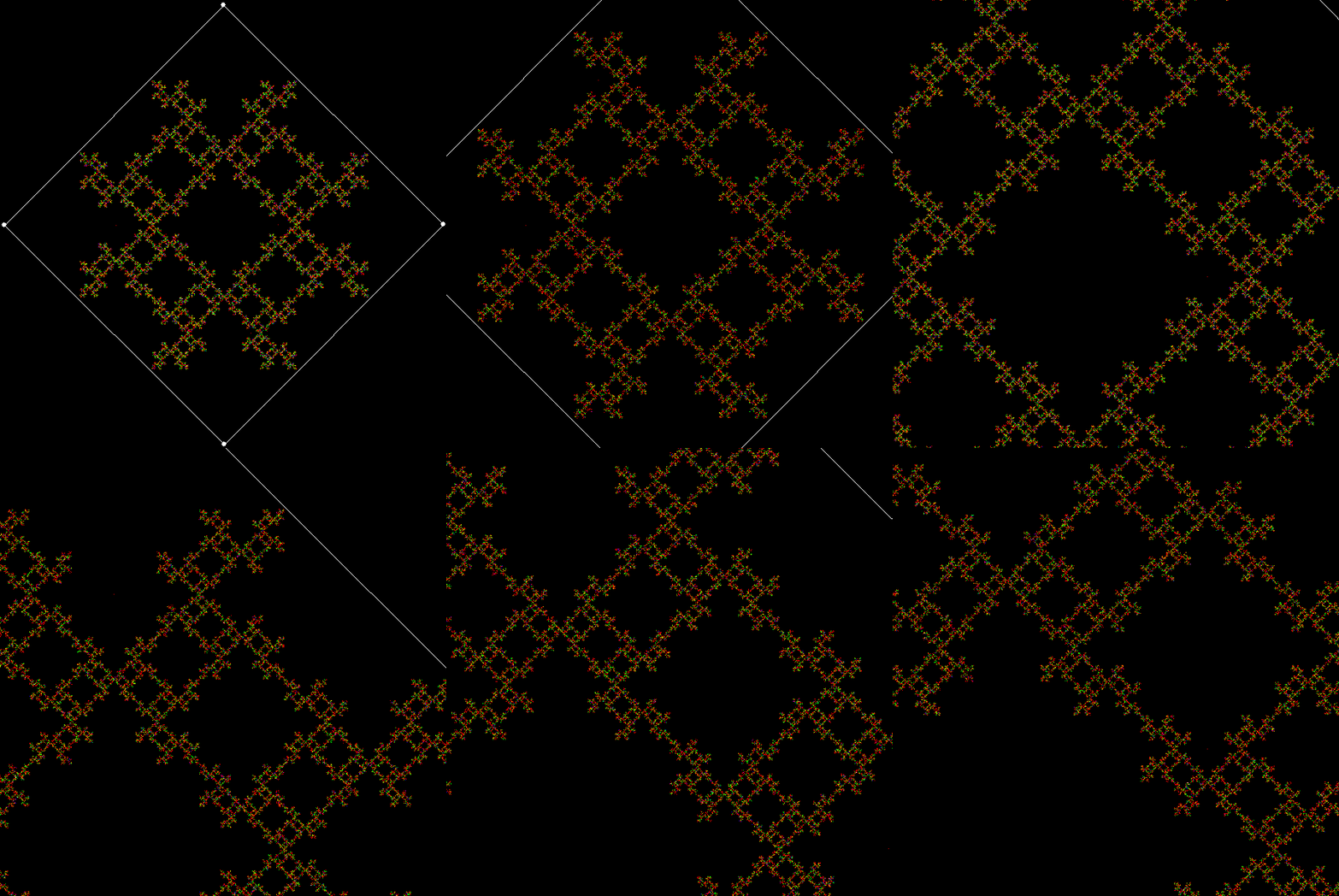
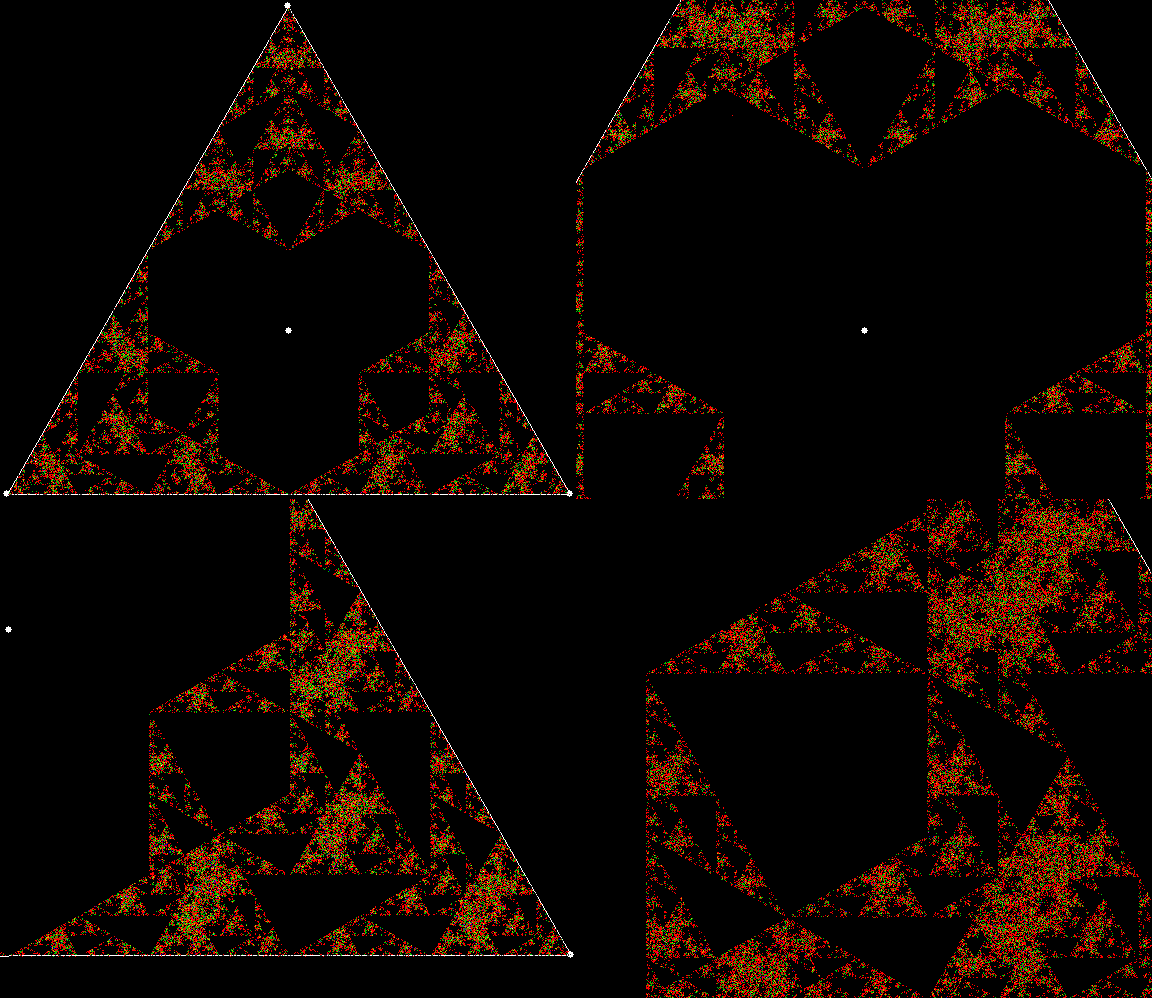
But what happens if you impose restrictions on the randomly chosen corner (or chorner)? Suppose you can’t choose the same corner twice in a row. If this rule is applied to the square, this fractal appears:

restrict4_T


restrict4_Tanim

Now apply the no-corner-twice-in-a-row rule to a square that contains a central chorner. This fractal appears:

restrict4_Tc

And if the rule is that you can choose a corner twice in a row but not thrice? This fractal appears:

restrict4FT


restrict4FTc


Here is the rule is that a corner can’t be chosen if it was chosen two moves ago:

restrict4_3F

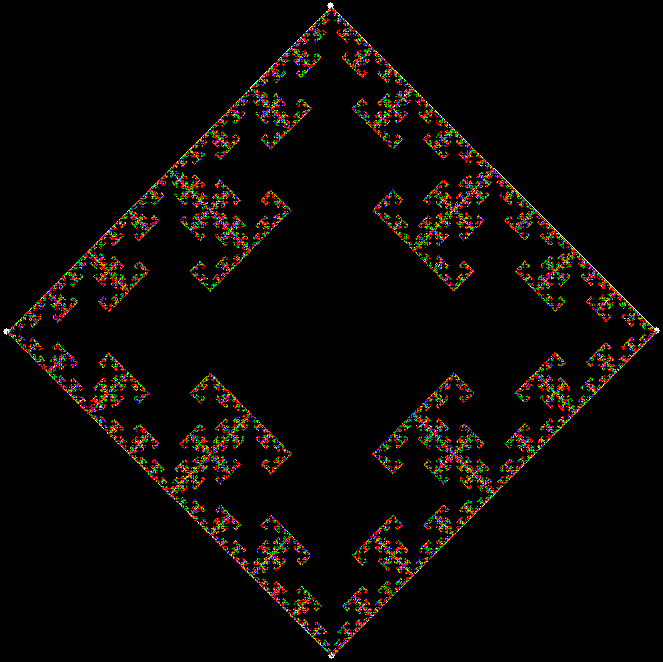
But what if the restriction is based not on how often or when a corner is chosen, but on its proximity, i.e. how near it is to the marked point? If the nearest corner can’t be chosen, the result is the same as the no-corner-twice-in-a-row rule:

prox4_1

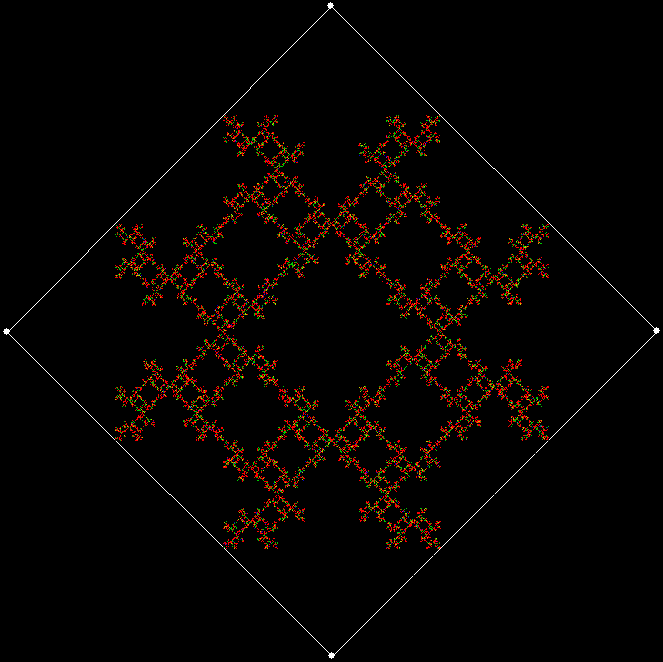
But if the second-nearest corner can’t be chosen, this fractal appears:

prox4_2

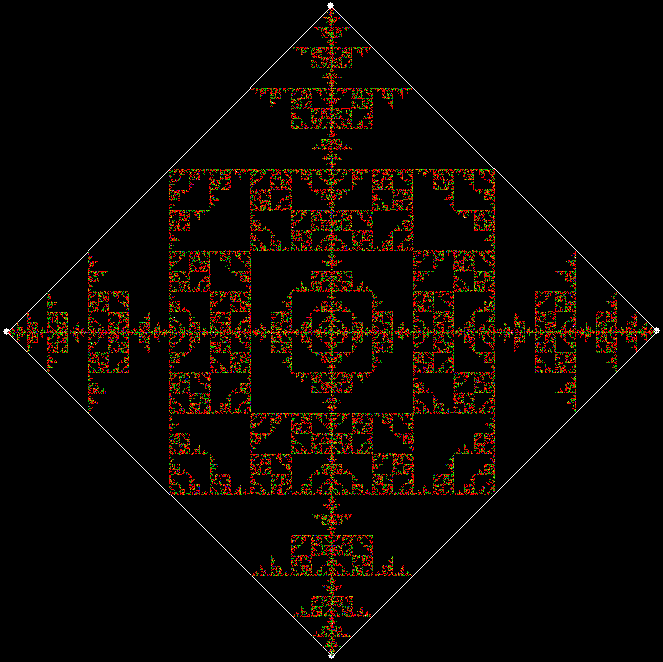
This is the fractal when the third-nearest corner can’t be chosen:

prox4_3

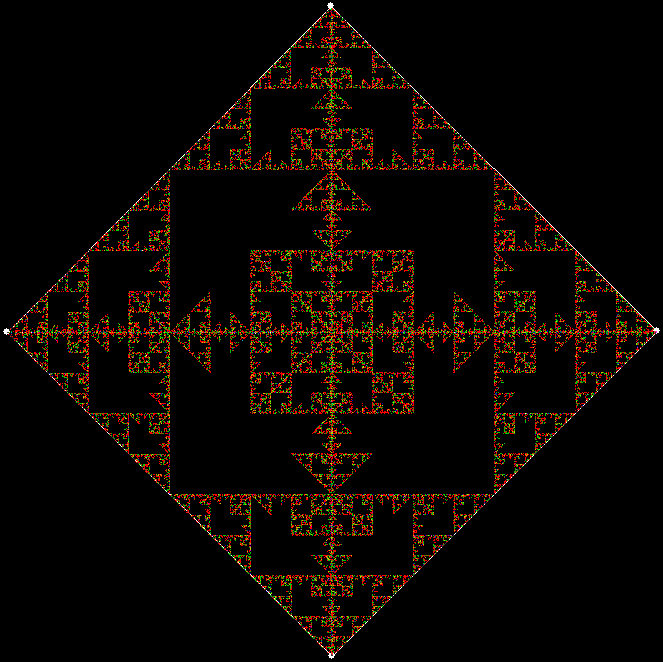
And this is the fractal when the fourth-nearest, or most distant, corner can’t be chosen:

prox4_4

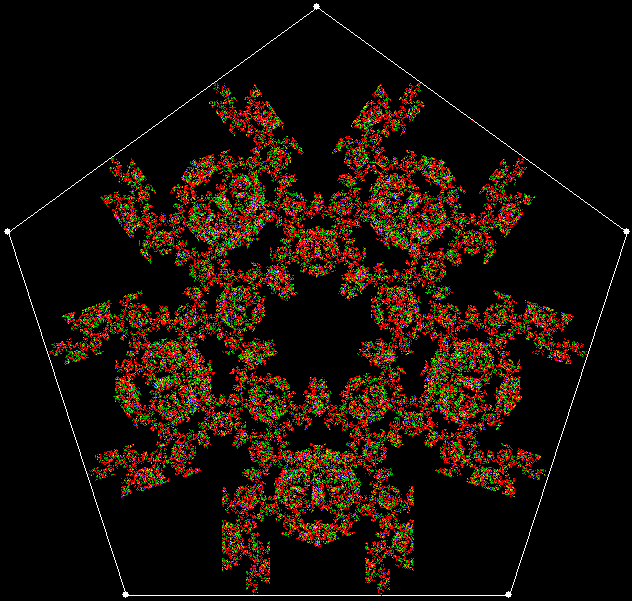
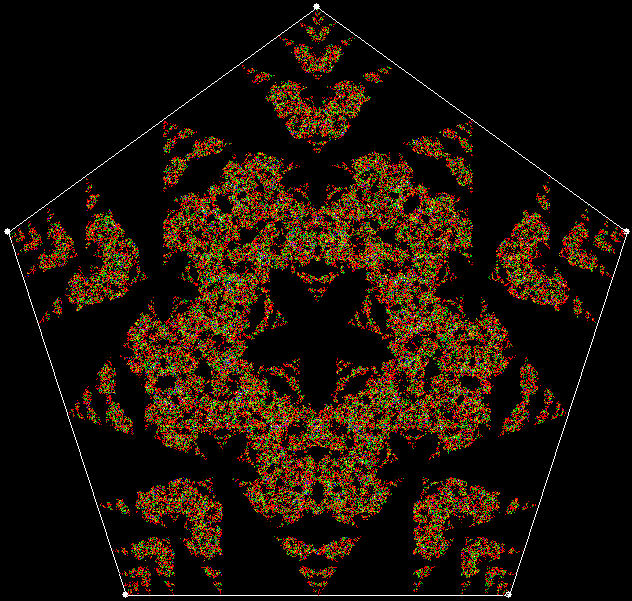
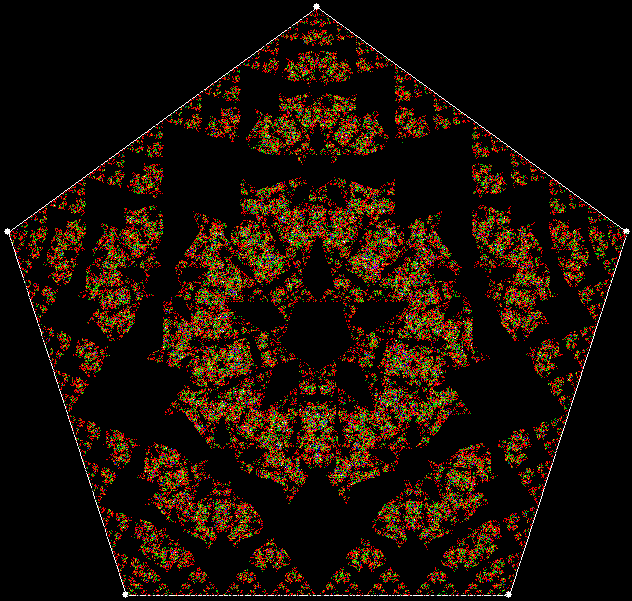
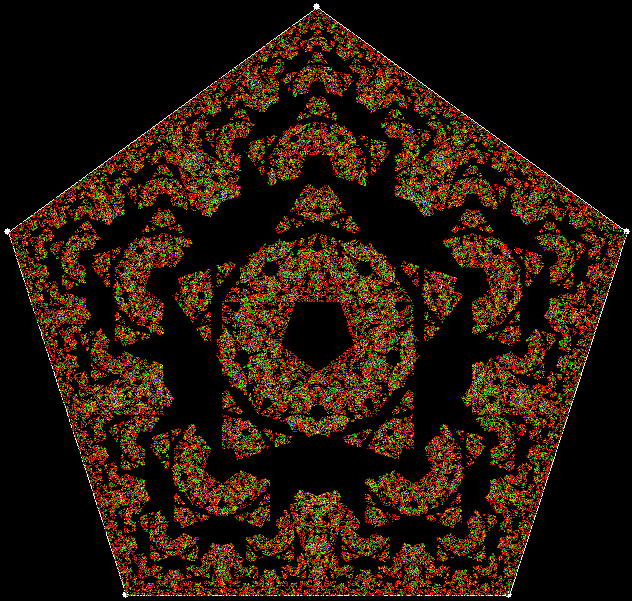
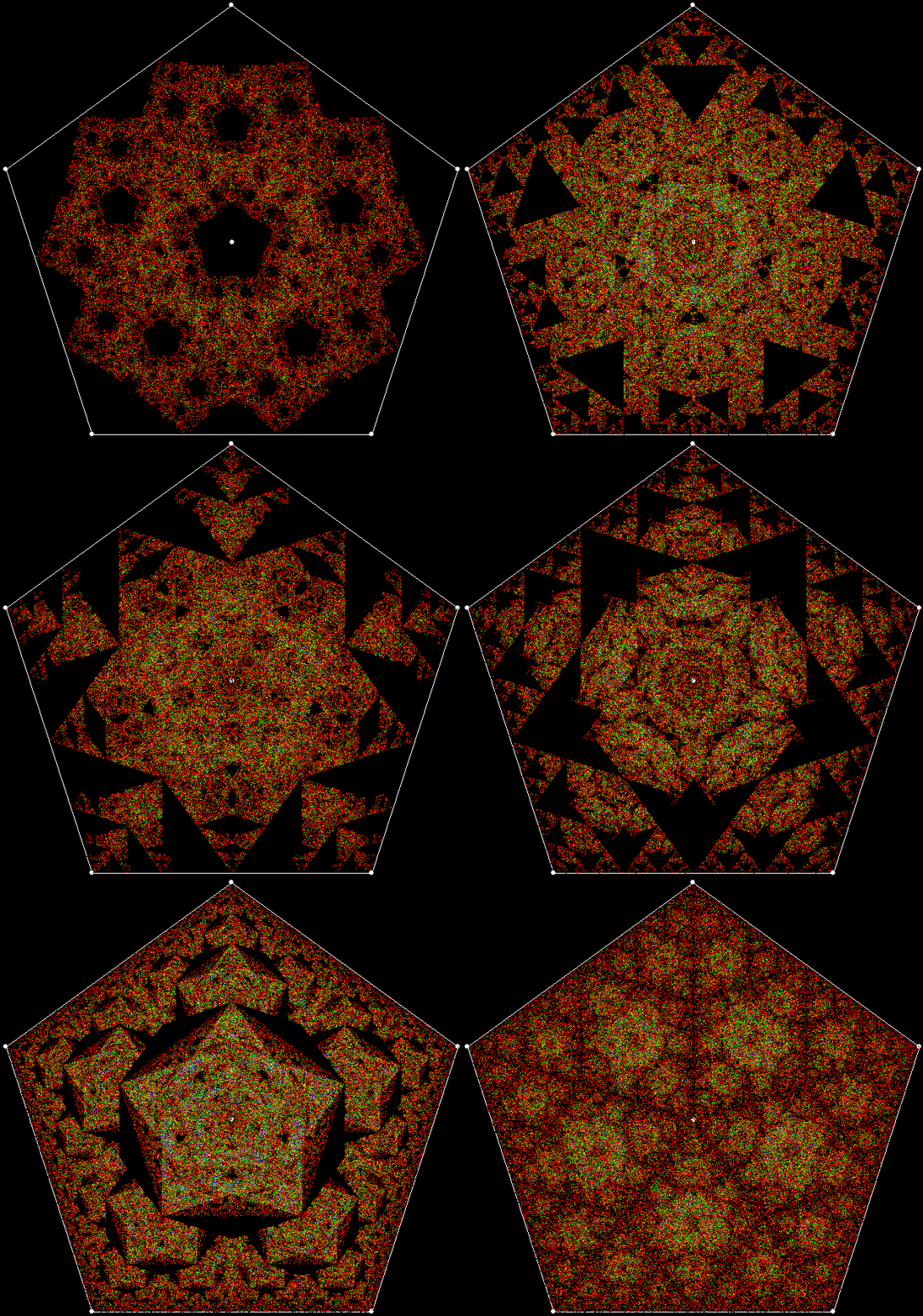
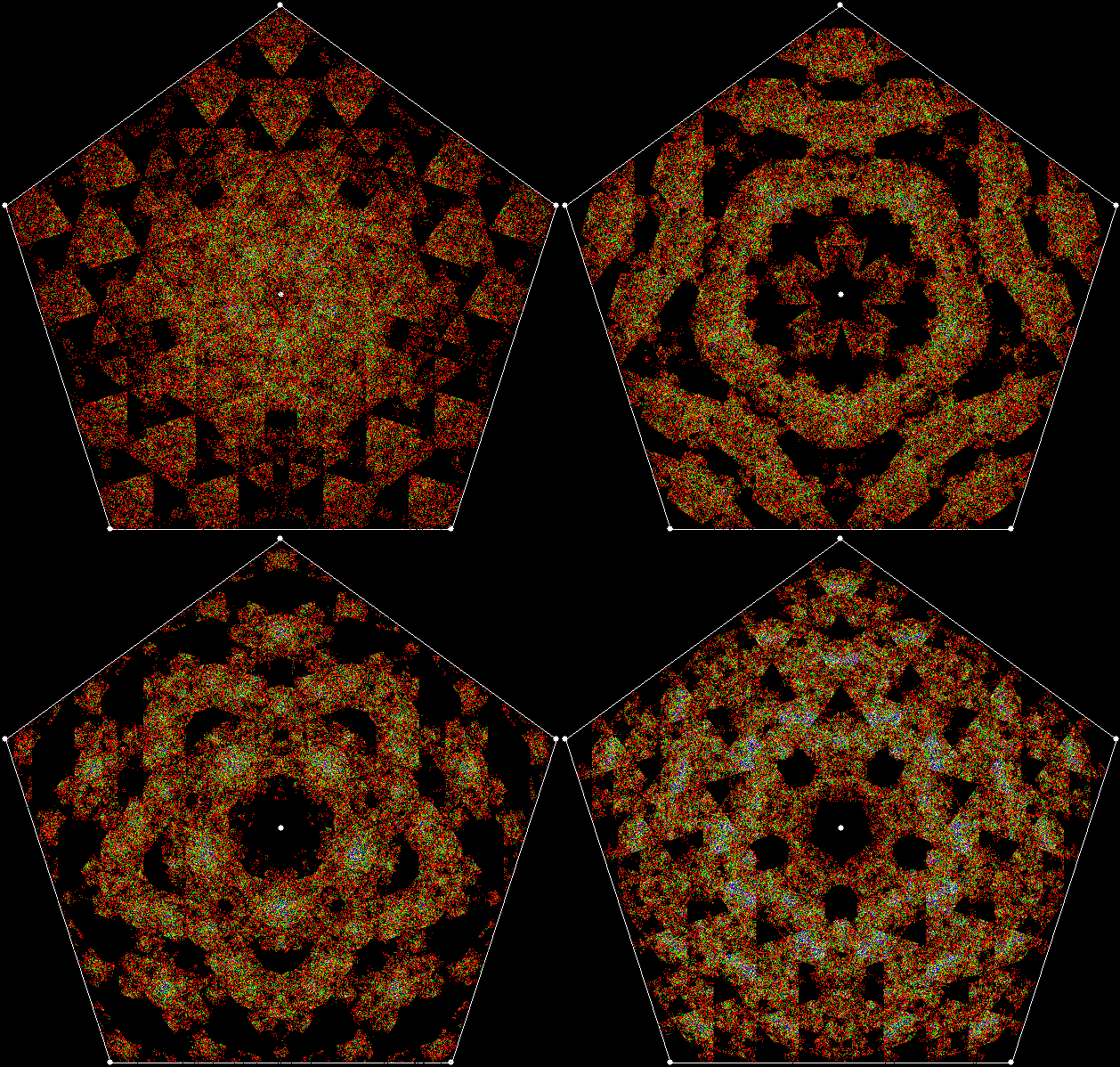
Here are the same restrictions applied to a pentagon:

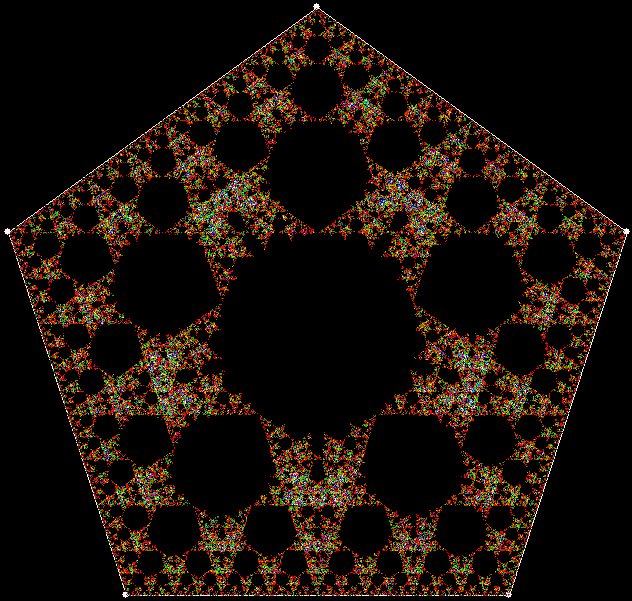
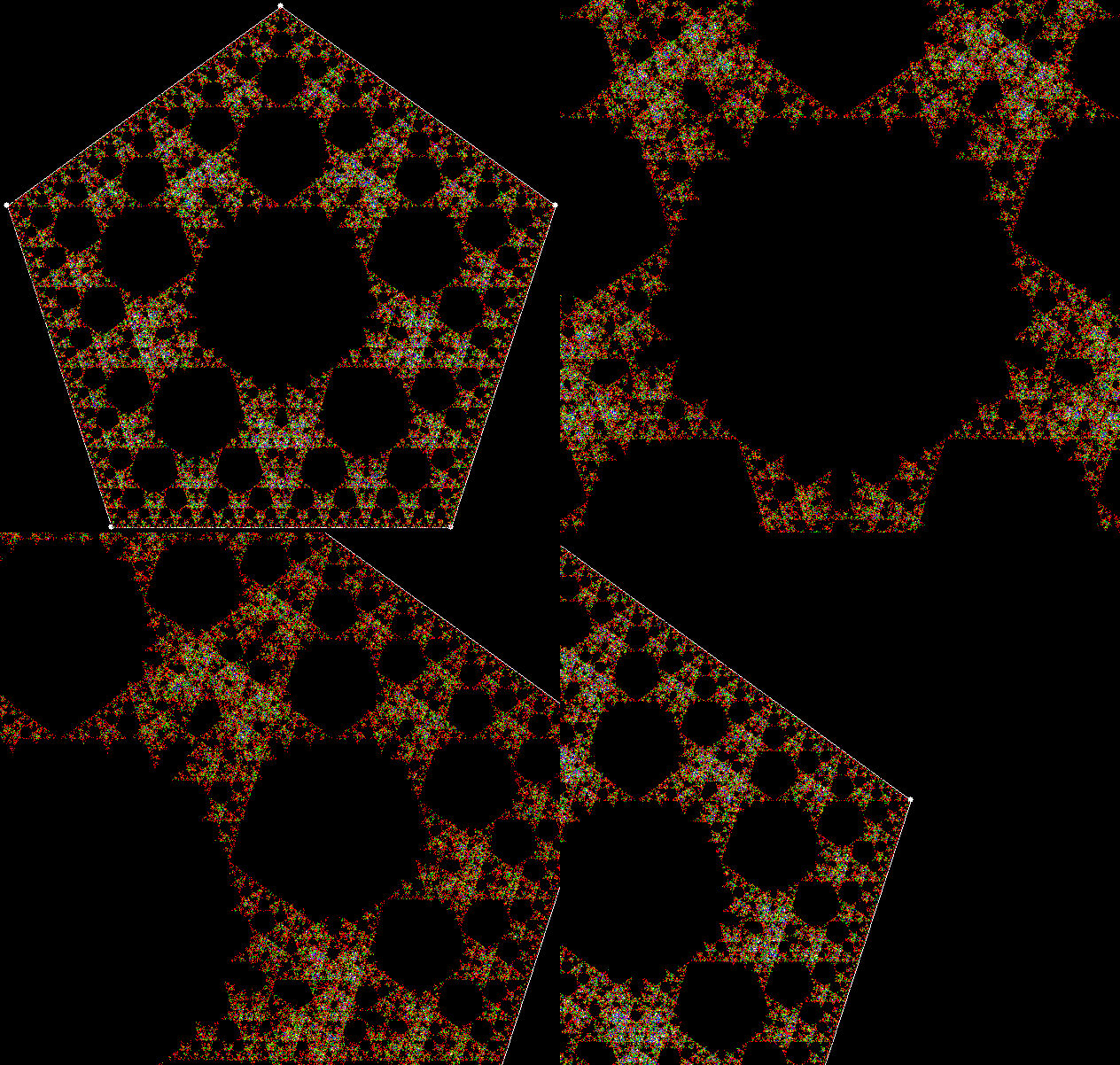
prox5_1

Nearest corner forbidden


prox5_2

Second-nearest corner forbidden


prox5_3

Third corner forbidden


prox5_4

Fourth corner forbidden


prox5_5

Fifth corner forbidden


prox5_5anim

Fifth corner forbidden (animated)

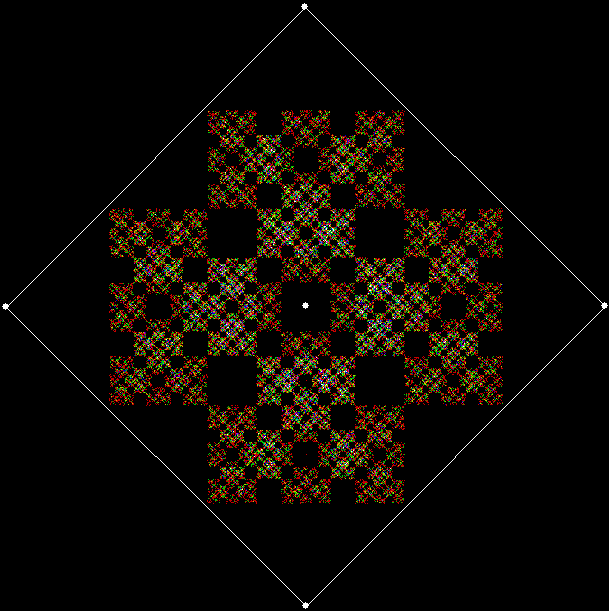
And a pentagon with a central chorner:

prox5_anim_c

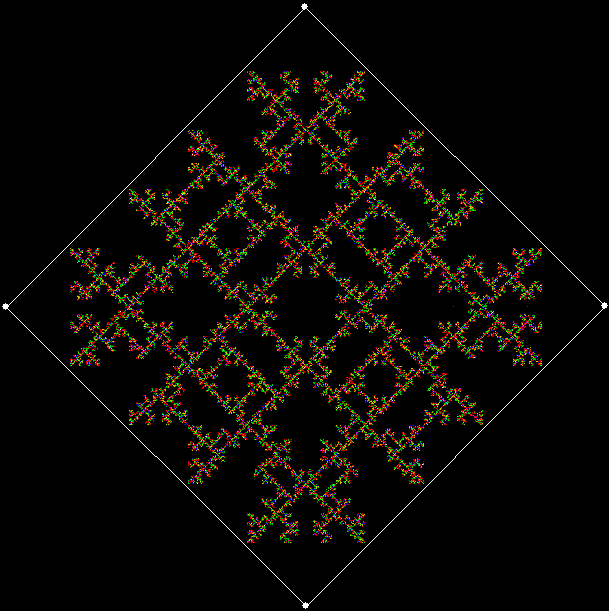
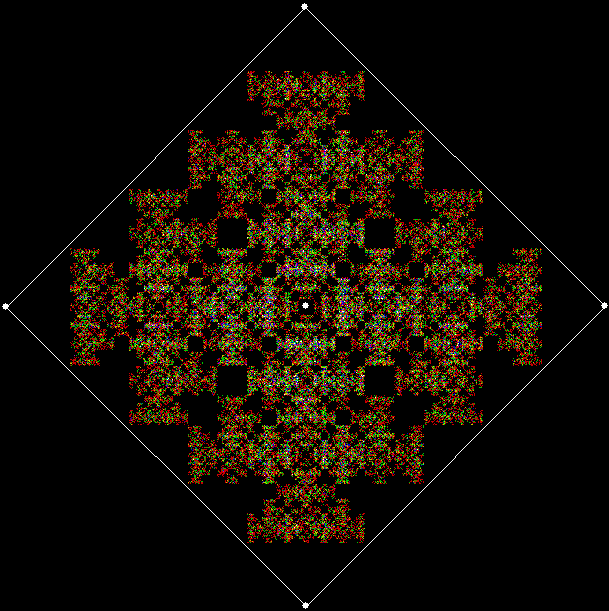
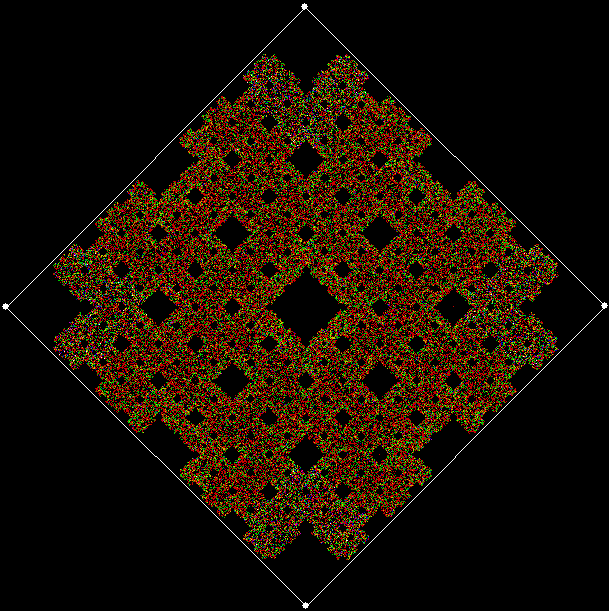
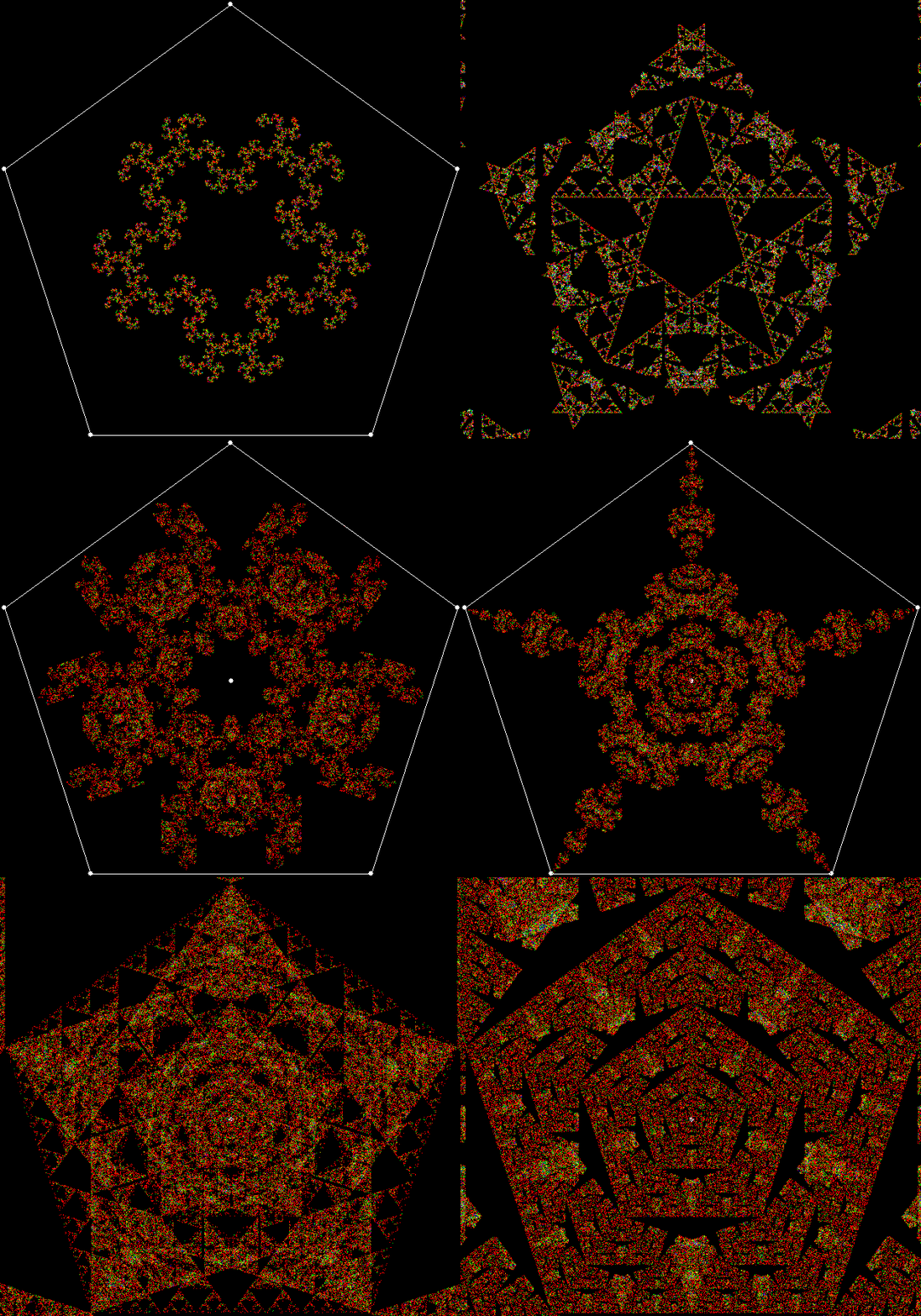
Now try excluding more than one corner. Here are pentagons excluding the n-nearest and n+1-nearest corners (for example, the nearest and second-nearest corners; the second-nearest and third-nearest; and so on):

prox5n_n1_anim

But what if the moving point is set equal to the n-nearest corner before it moves again? If the corner is the second-nearest and the shape is a triangle with a central chorner, this is the fractal that appears:

prox3_set2c


prox3_set2c_anim

Animated version

And here is the same rule applied to various n-nearest corners in a pentagon:

prox5_set_anim