The Grates of Roth

Van Halen’s Diamond Dave fails to sparkle:

In terms of music, it’s all Brit. It’s Freddie, Bowie and the guy in Zeppelin. Theatrically, you’re looking at Spider-Man, with a little Groucho thrown in. […] Pushing boundaries in terms of what [Van Halen] wore was never an ambition of ours, but it always seemed to be where we would end up. — David Lee Roth: ‘My advice for aspiring artists? Breathable fabrics’, The Guardian, 25vi2019.


Note that he said “Theatrically…” rather than “In terms of theater…” So he should’ve said “Musically, it’s all Brit.” Rather than using the ugly and pretentious “In terms of music…”


Hal Bent for Leather — Rob Halford talks like a Guardianista too

The Flight Album

Slow Exploding Gulls have always been one of my favorite bands and Yr Wylan Ddu (1996) is one of my favorite albums by these Exeter esotericists. The cover is one of their best too:

Yr Wylan Ddu (1996) by Slow Exploding Gulls


Yr Wylan Ddu is Welsh for “The Black Gull”. But it’s become a white gull to celebrate the album’s twenty-fifth anniversary:

Yr Wylan Ddu (2021 re-issue)


Elsewhere other-accessible

Mental Marine Music — an introduction to Slow Exploding Gulls
Slow Exploding Gulls at Bandcamp
Gull-SEG — the oldest and best Slow-Exploding-Gulls fan-site

Square’s Flair

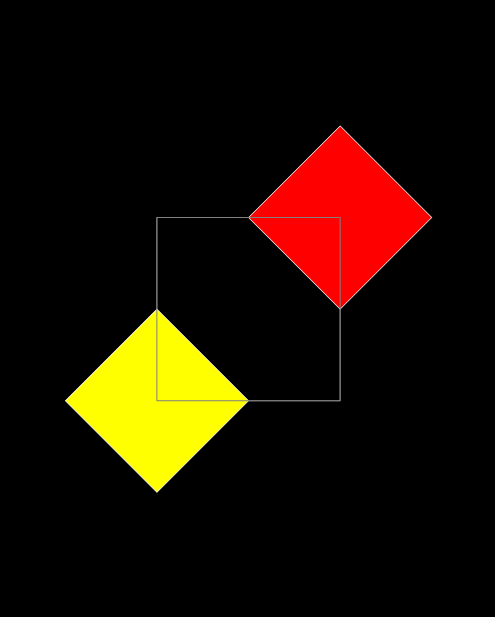
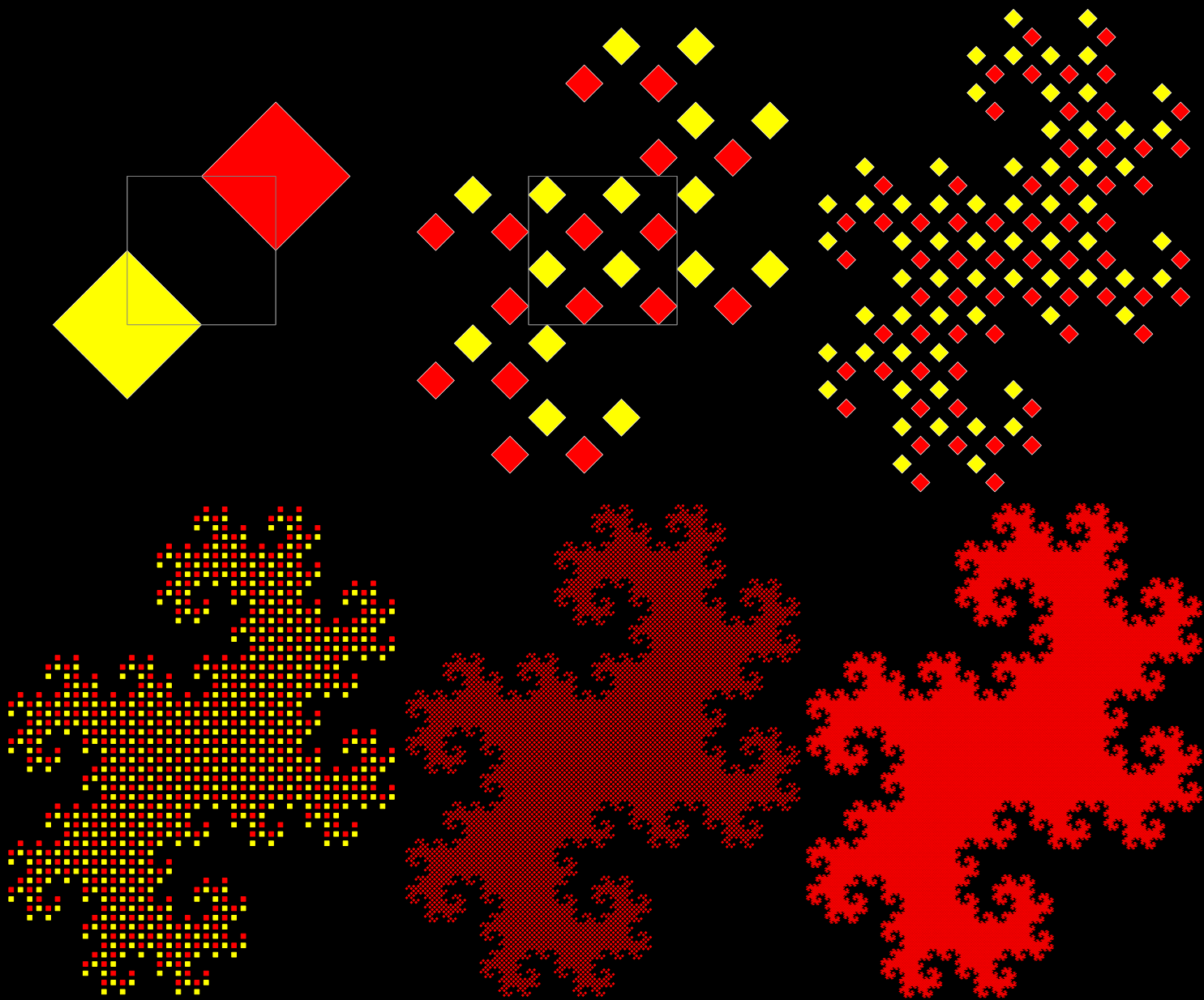
If you want to turn banality into beauty, start here with three staid and static squares:

Stage #1


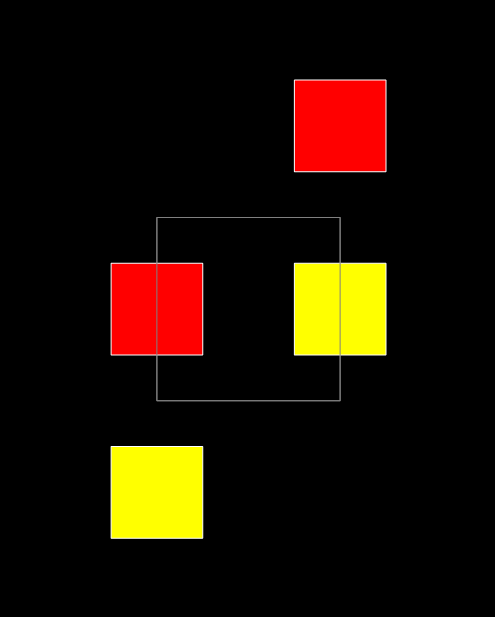
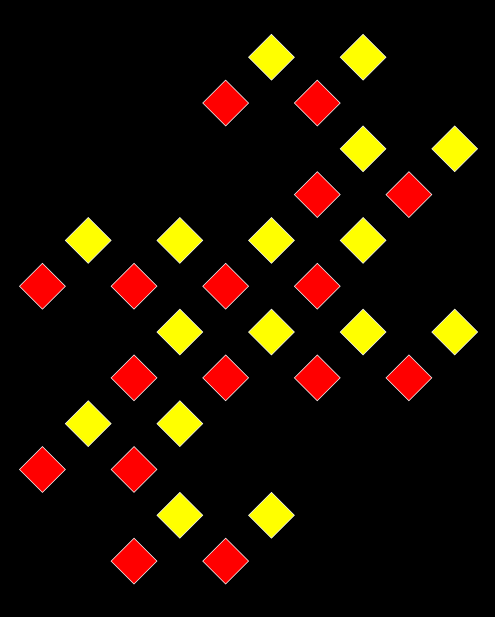
Now replace each red and yellow square with two new red and yellow squares orientated in the same way to the original square:

Stage #2


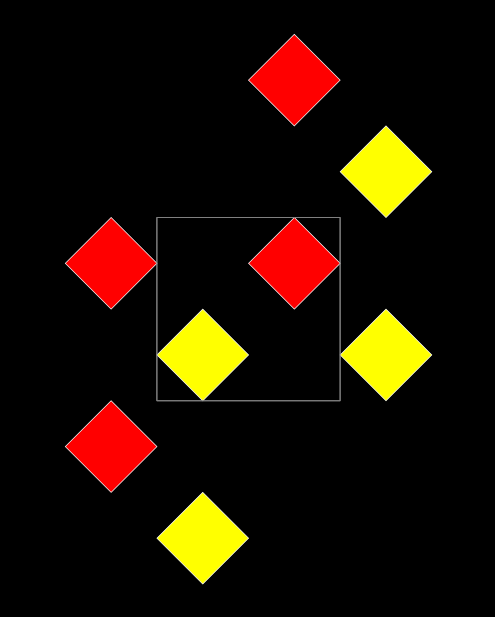
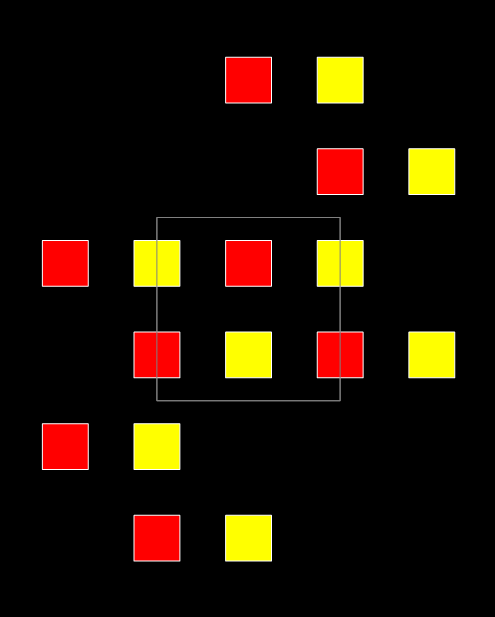
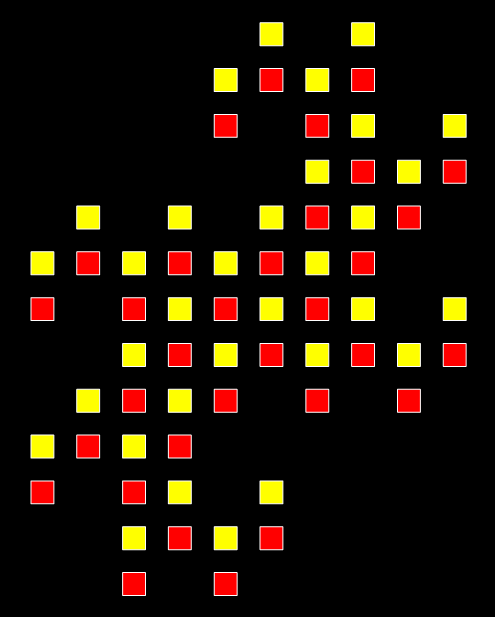
And repeat:

Stage #3


Stage #4


Stage #5


Stage #6


Stage #7


Stage #8


Stage #9


Stage #10


Stage #11


Stage #12


Stage #13


Stage #14


Stage #15


Stage #16


Stage #17


Stage #18


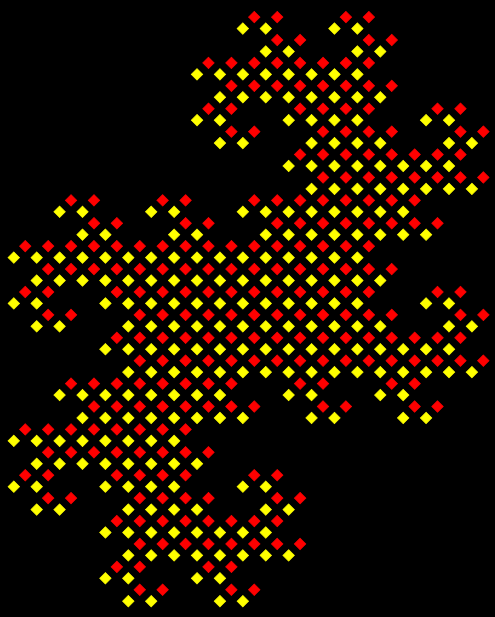
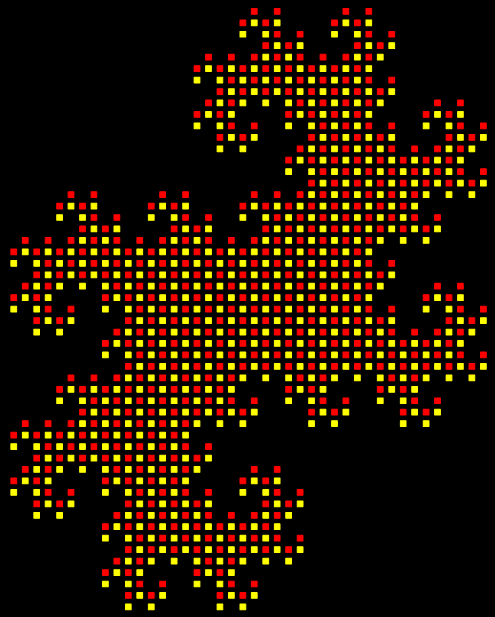
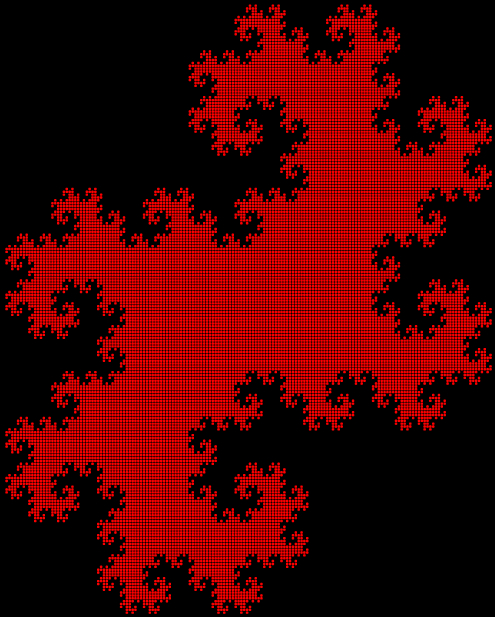
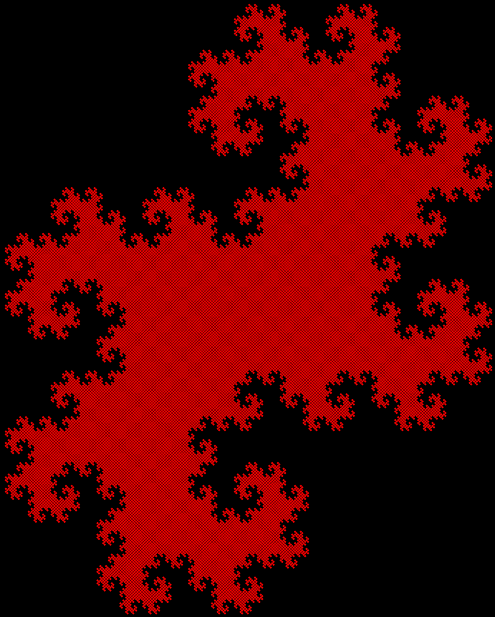
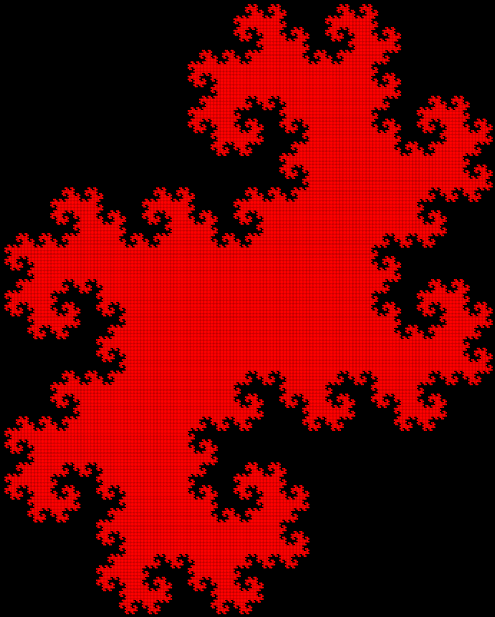
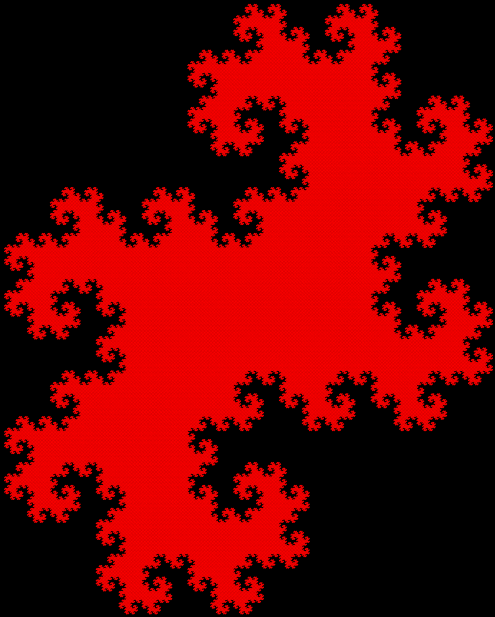
And you arrive in the end at a fractal called a dragon curve:

Dragon curve


Dragon curve (animated)


Elsewhere other-engageable

Curvous Energy — an introduction to dragon curves
All Posts — about dragon curves

Maximal Mensual Metrics

Like all minimally decent and politically aware people, I am keyly — and corely — committed to anti-racism on a maximal basis by any means necessary. Monkey-funker.

This is also why I am a corely — and keyly — committed member of the Guardian-reading community. If I am ever tempted to relent a micrometre in terms of the maximality of the metrics of my core commitment to anti-racism, the Guardian is there to remind me of what anti-racism is corely committed to achieving…

It’s been a turbulent year for race in Britain. So what next? — At the end of Black History Month, we ask prominent Black British figures to assess where the UK stands in terms of equality and cohesion, The Guardian, 30×21

Power Trap

Back in 2015, in an article called “Power Trip”, I looked at an unfamiliar sequence created by deleting zeroes from a familiar sequence. And I made a serious but fortunately-not-fatal error in my reasoning. The familiar sequence was powers of 2:

• 2, 4, 8, 16, 32, 64, 128, 256, 512, 1024, 2048, 4096, 8192, 16384, 32768, 65536, 131072, 262144, 524288, 1048576…

This is what happens when you delete the zeroes from the powers of 2 (and carry on multiplying by two):

2 * 2 = 4
4 * 2 = 8
8 * 2 = 16
16 * 2 = 32
32 * 2 = 64
64 * 2 = 128
128 * 2 = 256
256 * 2 = 512
512 * 2 = 1024 → 124
124 * 2 = 248
248 * 2 = 496
496 * 2 = 992
992 * 2 = 1984
1984 * 2 = 3968
3968 * 2 = 7936
7936 * 2 = 15872
15872 * 2 = 31744
31744 * 2 = 63488
63488 * 2 = 126976
126976 * 2 = 253952
253952 * 2 = 507904 → 5794
5794 * 2 = 11588
11588 * 2 = 23176
23176 * 2 = 46352
46352 * 2 = 92704 → 9274…


I pointed out that this new sequence has to repeat, because deleting zeroes prevents n growing beyond a certain size. Eventually, then, a number will repeat and the sequence will fall into a loop: “This happens at step 526 with 366784, which matches 366784 at step 490.”

But that’s deleting every zero. What happens if you delete every second zero? That is, you start with a zero-count, zc, of 0. When you meet the first zero in the sequence, zc = zc + 1 = 1. When you meet the second zero in the sequence, zc = zc + 1 = 2. So you delete that second zero and reset zc to 0. The first zero occurs when 1024 = 2 * 512, so 1024 is left as it is. The second zero occurs when 2 * 1024 = 2048, so 2048 becomes 248. The sequence for zc=2 looks like this:

1 * 2 = 2
2 * 2 = 4
4 * 2 = 8
8 * 2 = 16
16 * 2 = 32
32 * 2 = 64
64 * 2 = 128
128 * 2 = 256
256 * 2 = 512
512 * 2 = 1024 → 1024
1024 * 2 = 2048 → 248
248 * 2 = 496
496 * 2 = 992
992 * 2 = 1984
1984 * 2 = 3968
3968 * 2 = 7936
7936 * 2 = 15872
15872 * 2 = 31744
31744 * 2 = 63488
63488 * 2 = 126976
126976 * 2 = 253952
253952 * 2 = 507904 → 50794
50794 * 2 = 101588 → 101588
101588 * 2 = 203176 → 23176
23176 * 2 = 46352
46352 * 2 = 92704 → 92704
92704 * 2 = 185408 → 18548

Again, the sequence has to repeat and I claimed that it did so “at step 9134 with 5458864, which matches 5458864 at step 4166”. I also said that I hadn’t found the loop for the delete-every-third-zero sequence, where zc=3. Coming back to this type of sequence in 2021, I wrote a much faster machine-code program to see if I could find the answer for zc=3. And I thought that I had. My program said that the sequence for zc=3 repeats at step 166369 with 6138486272, which matches 6138486272 at step 25429.

Or does it repeat? Does it match? In 2021 I suddenly realized that I had neglected to consider something vital back in 2015: whether the zero-count was the same when the sequence appeared to repeat. Take the zc=2 sequence. If zc=0 at at step 4166 and zc=1 at 9134 (or vice versa), the sequence isn’t in a loop, because it will be deleting a different set of zeroes after step 4166 than it is after step 9134.

I checked whether the zero-count for that sequence is the same when the sequence appears to repeat. Fortunately, it is the same and the zero-delete sequence for zc=2 does indeed begin looping “at step 9134 with 5458864, which matches 5458864 at step 4166”.

So my error wasn’t fatal for the zc=2 sequence. But what about the zc=3 sequence? Alas, the zero-count is different for 6138486272 at step 166369 than for 6138486272 at step 25429. The sequence doesn’t behave the same after those steps and hasn’t looped. I needed to find the n1 = n2 for steps s1 and s2 where zc1 = zc2. And even with the much faster machine-code program it took some time. But I can now say that 958718377984 at step 379046, with zc=0, matches 958718377984 at step 200906, with zc=0.

El Sabor de Salvador

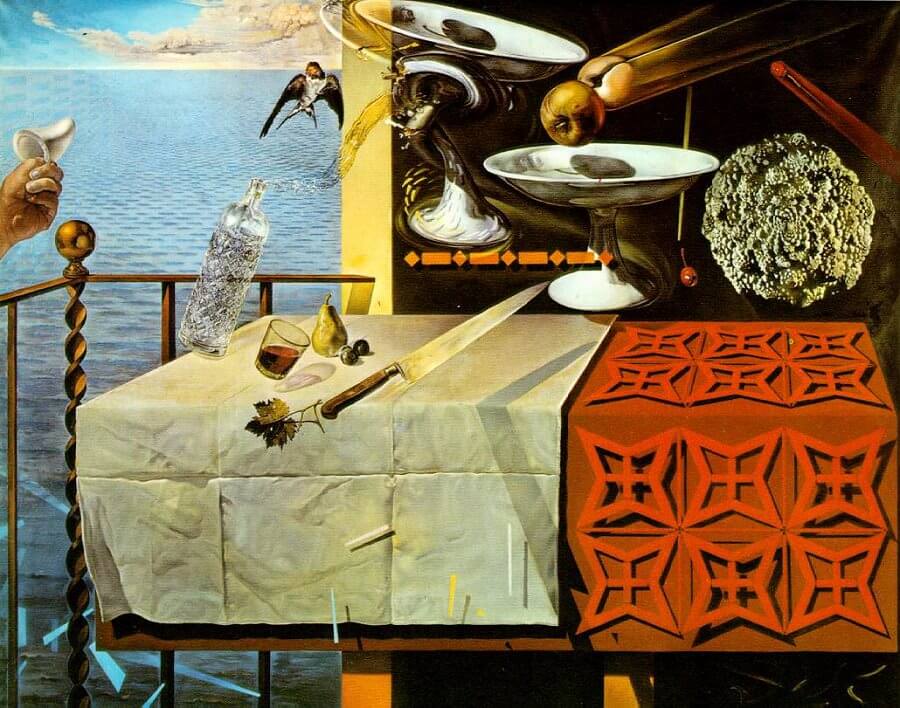
“Más es menos” is Spanish for “more is less”. And you can certainly see “más es menos” at work in the paintings of that greatest of Spaniards, Salvador Dalí. The more technically skilled and detailed his art became, the less powerful and interesting it was. Compare Sleep, from 1937…

Le Sommeil (Sleep), 1937

…with Still Life — Fast Moving from 1956:

Still Life — Fast Moving,1956

Toxic Turntable #23

Currently listening…

• Transylv Nexus, Vamplifier (1996)
• Jotmu Bkhu, We Stay Zipped (Songs for the Carnival) (1999)
• Ranfha, Deep to Deep (1979)
• Nade Famborne, Odū Pkeem x’Siqa (1985)
• Adrienne Prunier, Pour la Déesse (1982)
• Yoagoįh, Rhythmic Jellifications (1993)
• Caedicore, As Weird Is Null (1999)
• XS-Doz, Texanized (1985)
• Epics in the Underworld, Khviu (2012)
• Todt-89, Numina (LXVII) (2014)
• Ussia, My Kayak (Live Mixes) (1992)
• Ekkokoz, Qualis Tu Es (1997)
• Yoke of Cud, Red Leap (Led Reap) (1990)
• Fixenhoff, Swedish Amiff (1994)
• Aiyhor, Ihqxelyy-043478 (2006)
• Caiunic, HYH (1988)
• Uz R Under, Deborah the Henge (1983)
• Loftmaft, Horse for the Silent Shore (1996)
• Futility in Mexborough, Axolotl Dreams (2003)
• Sleek Boutique, Canopy Collapse (2020)
• Mmjojg Siki, A Height to Savor (1983)
• Franz Anton Hoffmeister, Viola Concerto in D major (1949)
• Froschkönig Gabriel, Aros Dillidia (1995)


Previously pre-posted:

Toxic Turntable #1#2#3#4#5#6#7#8#9#10#11#12#13#14#15#16#17#18#19#20#21#22

Un Paon Papyrocentrique

Le Paon dans les Pyrénées — a review at Papyrocentric Performativity of Julian Barnes’ The Man in the Red Coat (2019), which contains a lot about Robert de Montesquiou


Elsewhere other-accessible

Portrait of a Peacock — Cornelia Otis Skinner’s biographical sketch of Montesquiou

Ciss Bliss

Si hortum in bibliotheca habes, deerit nihil. – Cicero (106-43 BC), Epistulae ad Familiares, Liber IX, Epistula IV

• “If you have a garden and a library, you lack for nothing.” — Cicero, Letters to Friends, Book 9, Letter 4

Spiral Artefact

What’s the next number in this sequence of integers?


5, 14, 19, 23, 28, 32, 37, 41, 46, 50, 55... (A227793 at the OEIS)

It shouldn’t be hard to work out that it’s 64 — the sum-of-digits of n is divisible by 5, i.e., digsum(n) mod 5 = 0. Now try summing the numbers in that sequence:


5 + 14 = 19
19 + 19 = 38
38 + 23 = 61
61 + 28 = 89
89 + 32 = 121
121 + 37 = 158
158 + 41 = 199
199 + 46 = 245
[...]

Here are the cumulative sums as another sequence:


5, 19, 38, 61, 89, 121, 158, 199, 245, 295, 350, 414, 483, 556, 634, 716, 803, 894, 990, 1094, 1203, 1316, 1434, 1556, 1683, 1814, 1950, 2090, 2235, 2389, 2548, 2711, 2879, 3051, 3228, 3409, 3595, 3785, 3980, 4183, 4391, 4603, 4820, 5041, 5267, 5497, 5732, 5976, 6225...

And there’s that cumulative-sum sequence represented as a spiral:

Spiral for cumulative sum of n where digsum(n) mod 5 = 0


You can see how the spiral is created by following 0,1,2,3,4,5,6,7,8,9,A,B,C,D,E… from the center:


ZYXWVU
GFEDCT
H432BS
I501AR
J6789Q
KLMNOP

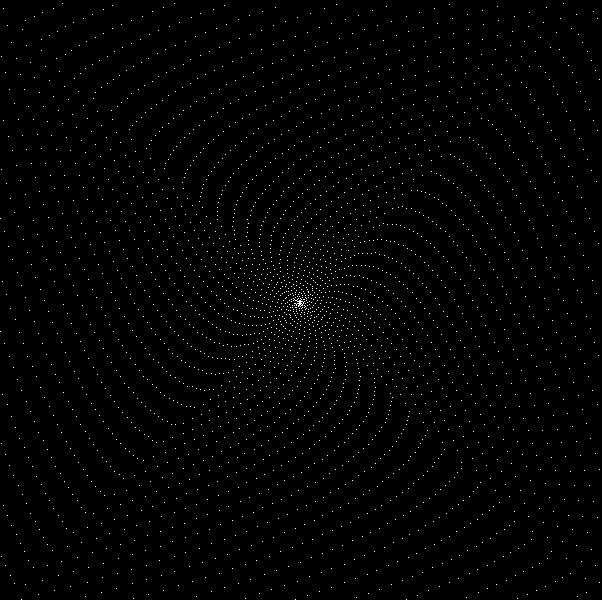
What about other values for the cumulative sums of digsum(n) mod m = 0? Here’s m = 2,3,4,5,6,7:
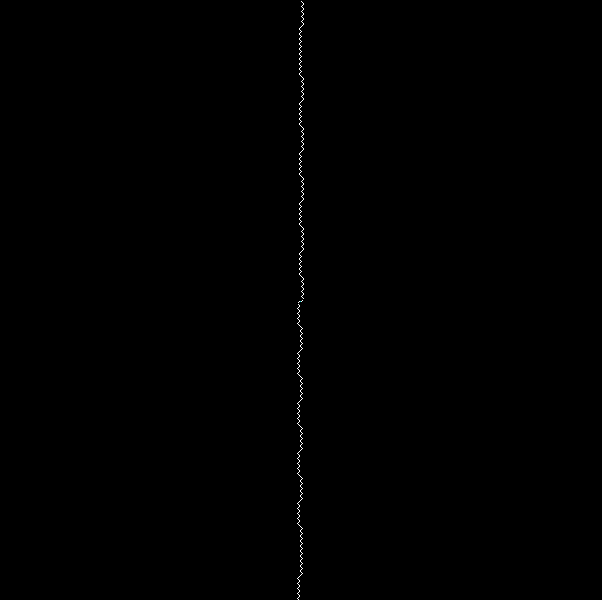
Spiral for cumulative sum of n where digsum(n) mod 2 = 0
s1 = 2, 4, 6, 8, 11, 13, 15, 17, 19, 20, 22…
s2 = 2, 6, 12, 20, 31, 44, 59, 76, 95, 115… (cumulative sum of s1)
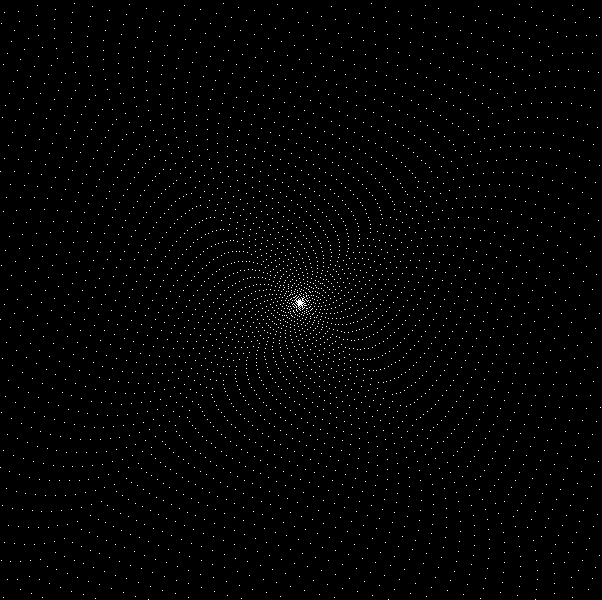

sum of digsum(n) mod 3 = 0
s1 = 3, 6, 9, 12, 15, 18, 21, 24, 27, 30, 33…
s2 = 3, 9, 18, 30, 45, 63, 84, 108, 135, 165…
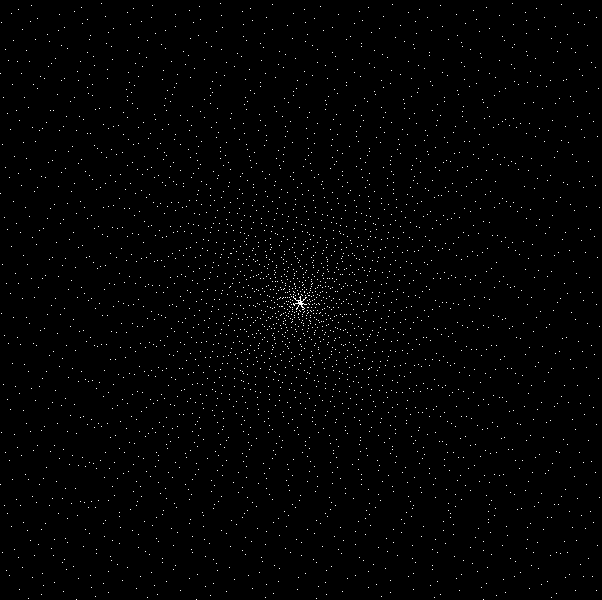

sum of digsum(n) mod 4 = 0
s1 = 4, 8, 13, 17, 22, 26, 31, 35, 39, 40, 44…
s2 = 4, 12, 25, 42, 64, 90, 121, 156, 195, 235…


sum of digsum(n) mod 5 = 0
s1 = 5, 14, 19, 23, 28, 32, 37, 41, 46, 50, 55…
s2 = 5, 19, 38, 61, 89, 121, 158, 199, 245, 295…


sum of digsum(n) mod 6 = 0
s1 = 6, 15, 24, 33, 39, 42, 48, 51, 57, 60, 66…
s2 = 6, 21, 45, 78, 117, 159, 207, 258, 315, 375…
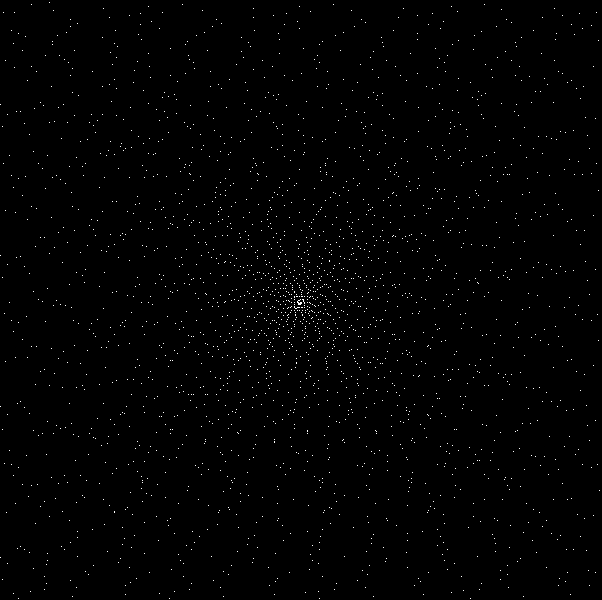

sum of digsum(n) mod 7 = 0
s1 = 7, 16, 25, 34, 43, 52, 59, 61, 68, 70, 77…
s2 = 7, 23, 48, 82, 125, 177, 236, 297, 365, 435…


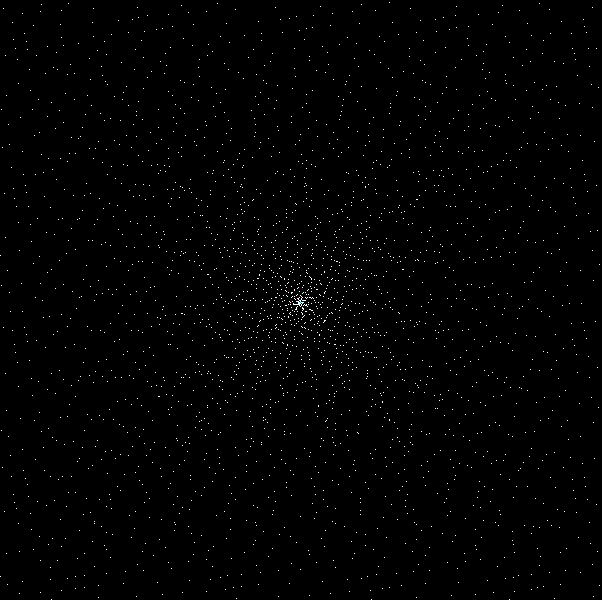
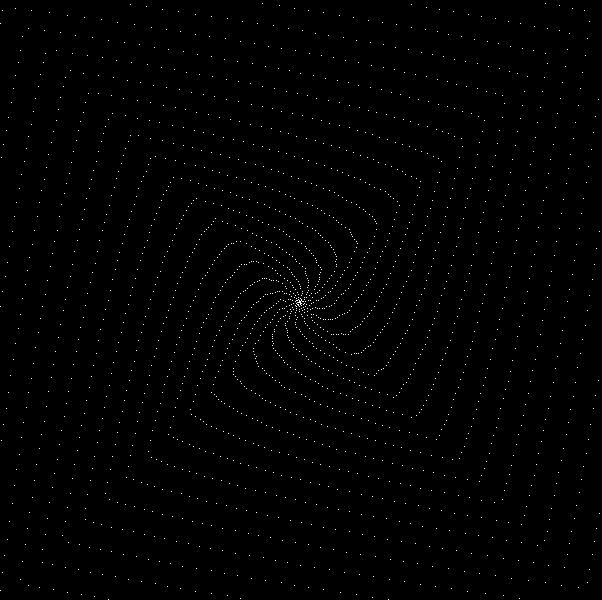
The spiral for m = 2 is strange, but the spirals are similar after that. Until m = 8, when something strange happens again:

sum of digsum(n) mod 8 = 0
s1 = 8, 17, 26, 35, 44, 53, 62, 71, 79, 80, 88…
s2 = 8, 25, 51, 86, 130, 183, 245, 316, 395, 475…


Then the spirals return to normal for m = 9, 10:
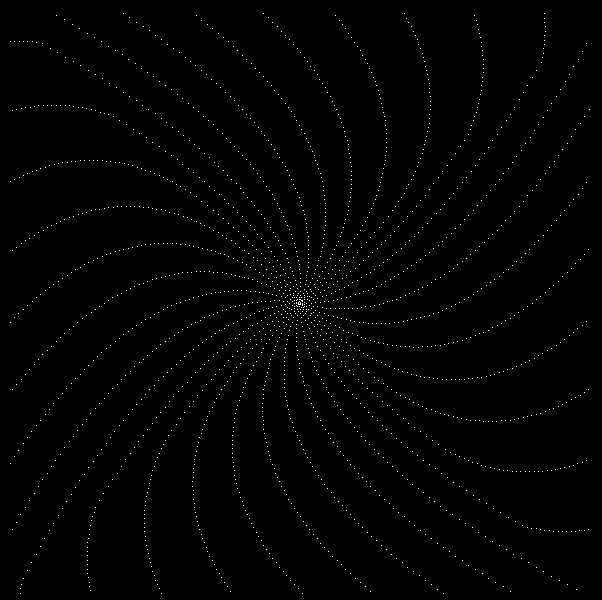
sum of digsum(n) mod 9 = 0
s1 = 9, 18, 27, 36, 45, 54, 63, 72, 81, 90, 99…
s2 = 9, 27, 54, 90, 135, 189, 252, 324, 405, 495…


sum of digsum(n) mod 10 = 0
s1 = 19, 28, 37, 46, 55, 64, 73, 82, 91, 109, 118…
s2 = 19, 47, 84, 130, 185, 249, 322, 404, 495, 604…


Here’s an animated gif of m = 8 at higher and higher resolution:
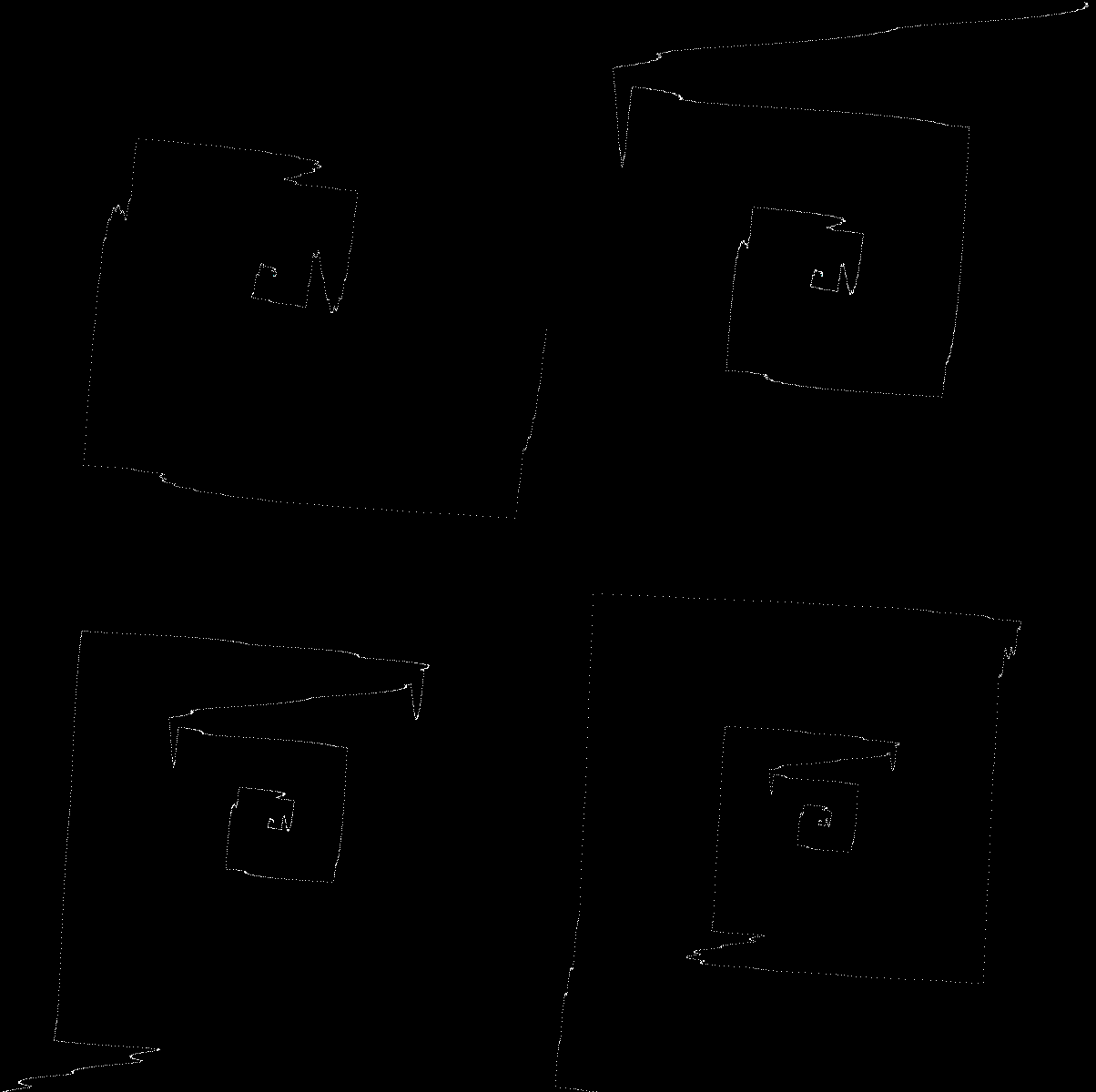
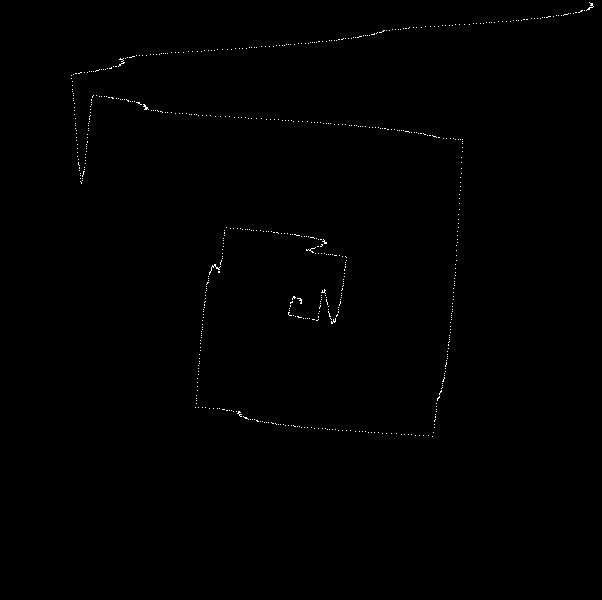
sum of digsum(n) mod 8 = 0 (animated gif)


You might think this strange behavior is dependant on the base in which the dig-sum is calculated. It isn’t. Here’s an animated gif for other bases in which the mod-8 spiral behaves strangely:
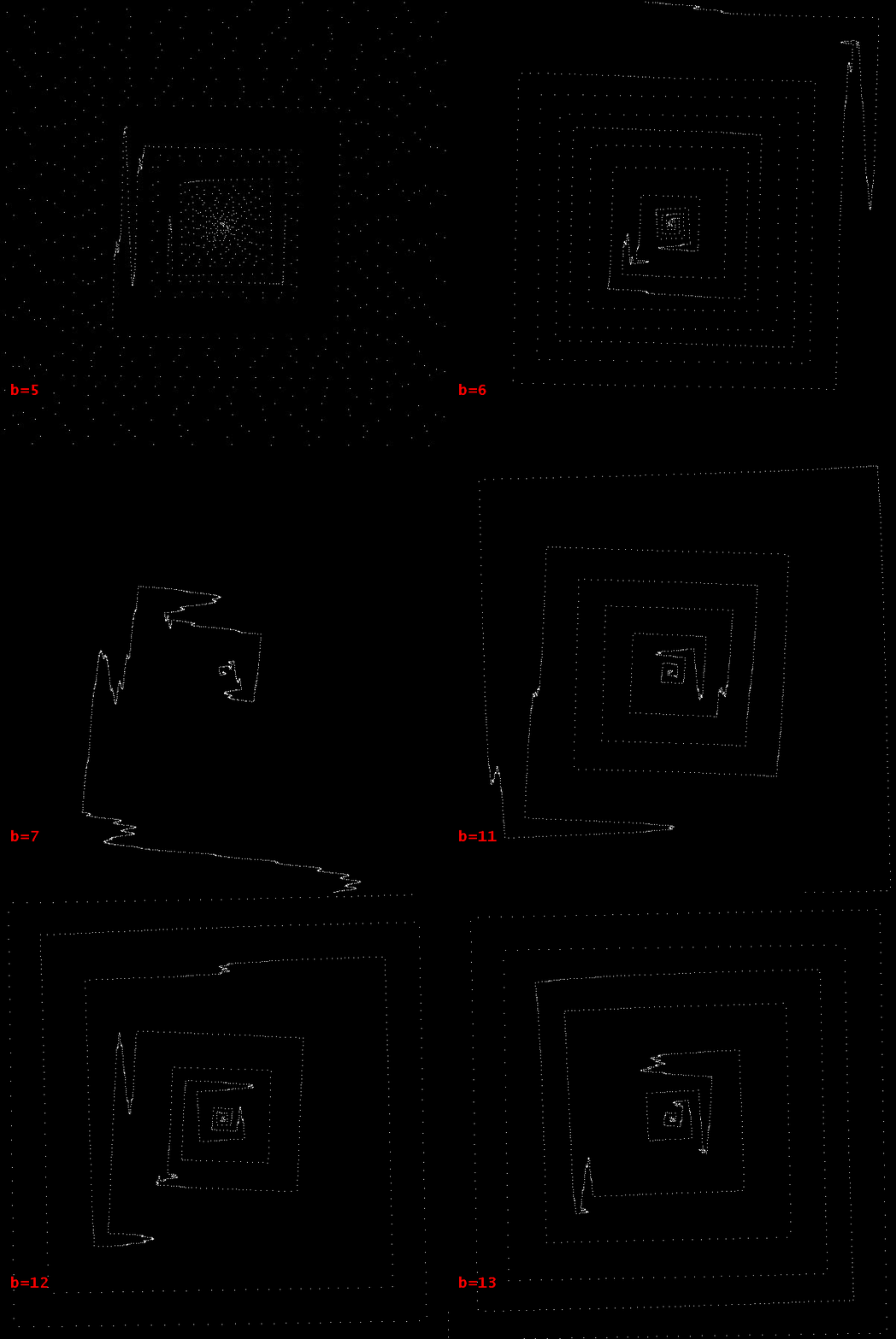
sum of digsum(n) mod 8 = 0 in base b = 5, 6, 7, 9, 11, 12, 13 (animated gif)


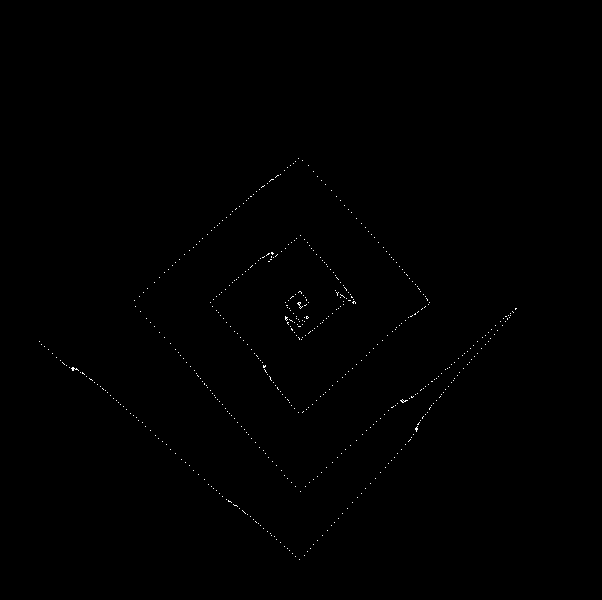
But the mod-8 spiral stops behaving strangely when the spiral is like this, as a diamond:


   W
  XIV
 YJ8HU
ZK927GT
LA3016FS
 MB45ER
  NCDQ
   OP

Now the mod-8 spiral looks like this:
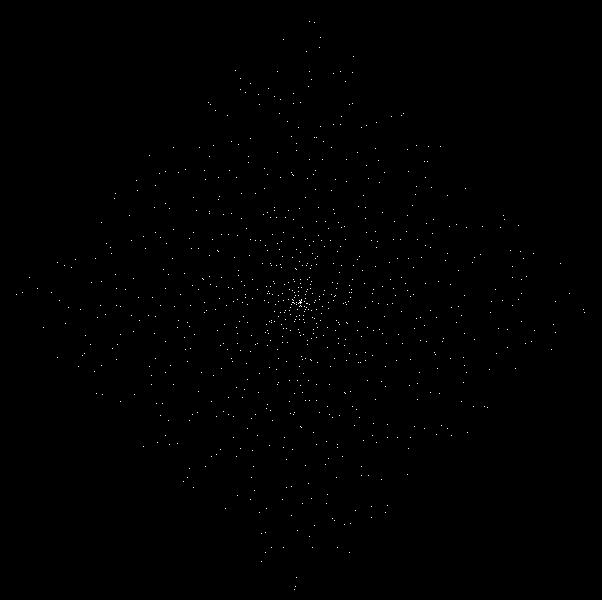
sum of digsum(n) mod 8 = 0 (diamond spiral)


But the mod-4 and mod-9 spirals look like this:
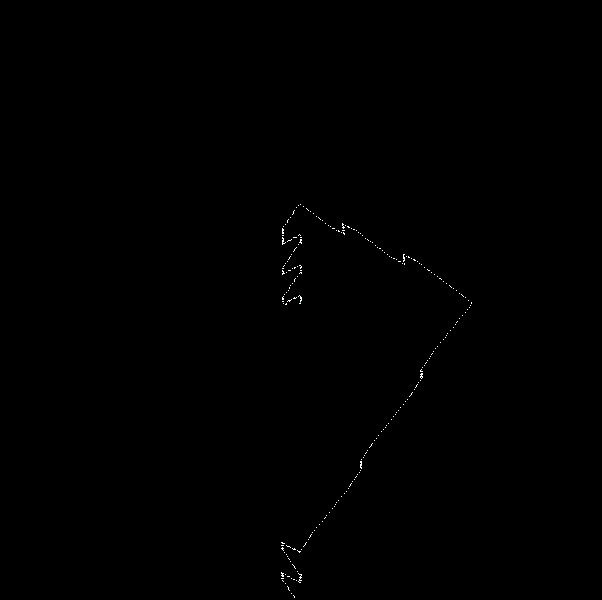
sum of digsum(n) mod 4 = 0 (diamond spiral)


sum of digsum(n) mod 9 = 0 (diamond spiral)


You can also construct the spirals as a triangle, like this:


     U
    VCT
   WD2CS
  XE301AR
 YF456789Q
ZGHIJKLMNOP

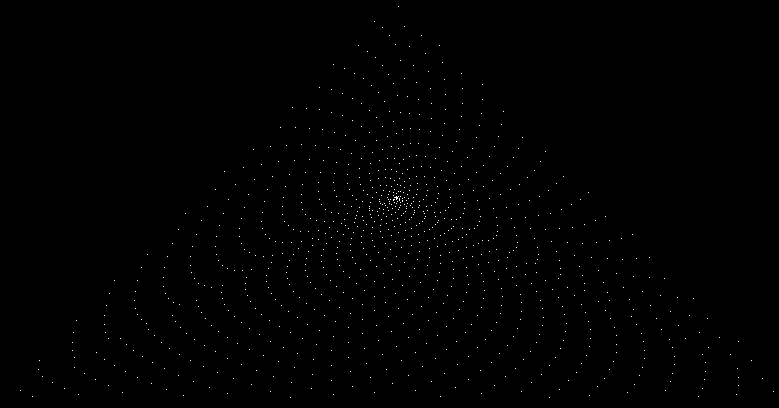
Here’s the beginning of the mod-5 triangular spiral:
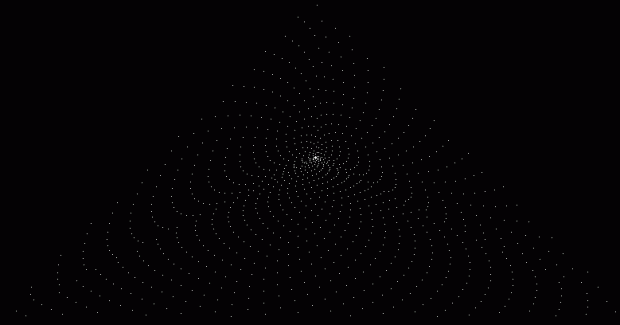
sum of digsum(n) mod 5 = 0 (triangular spiral) (open in new window for full size)


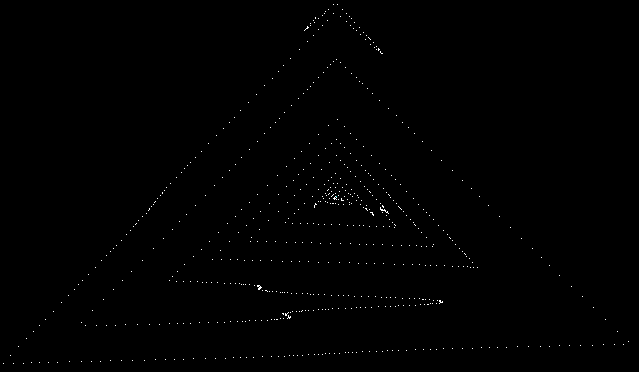
And the beginning of the mod-8 triangular spiral:
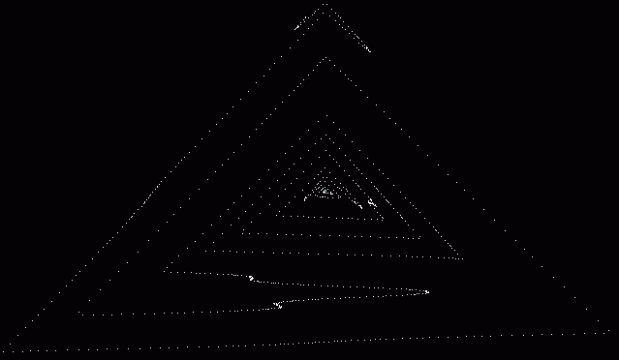
sum of digsum(n) mod 8 = 0 (triangular spiral) (open in new window for full size)


The mod-8 spiral is behaving strangely again. So the strangeness is partly an artefact of the way the spirals are constructed.

Post-Performative Post-Scriptum

“Spiral Artefact”, the title of this incendiary intervention, is of course a tip-of-the-hat to core Black-Sabbath track “Spiral Architect”, off core Black-Sabbath album Sabbath Bloody Sabbath, issued in core Black-Sabbath success-period of 1973.