Performativizing Papyrocentricity #53

Papyrocentric Performativity Presents:

• Pocket to Laroussia – Larousse de Poche (Librarie Larousse 1954)

• Translated to Heaven – Les Hommes Volants, Valerie Moolman, trans. Madeleine Astorkia (Time-Life Books 1981)

• The Eyes of the Infinite Mind – Ficciones, Jorge Luis Borges

• Caught by the Furze – Francis Walker’s Aphids, John P. Doncaster (British Museum 1961)

• Commit to Crunch – Maverick Munch: Selecting a Sinisterly Savory Snack to Reinforce Your Rhizomatically Radical Reading, Will Self (TransVisceral Books 2016)


Or Read a Review at Random: RaRaR
Performativizing Papyrocentricity #52

Papyrocentric Performativity Presents:

• Reds in the Head – The War of the Worlds, H.G. Wells (1898)

• Canine the Barbarian – The Call of the Wild, White Fang, and Other Stories, Jack London (Penguin American Library 1981)

• Star-Stuff – The Universe in 100 Key Discoveries, Giles Sparrow (Quercus 2012)

• An Island of Her Own – The Phantom Atlas: The Greatest Myths, Lies and Blunders on Maps, Edward Brooke-Hitching (Simon & Schuster 2016)


Or Read a Review at Random: RaRaR

Performativizing Papyrocentricity #51

Papyrocentric Performativity Presents:

• Bits of the Best – The Shorter Strachey, Lytton Strachey, ed. Michael Holroyd and Paul Levy (Oxford University Press 1980)

• Shaman On U! – Copendium: An Expedition into the Rock’n’Roll Underworld, Julian Cope (Faber and Faber 2012)

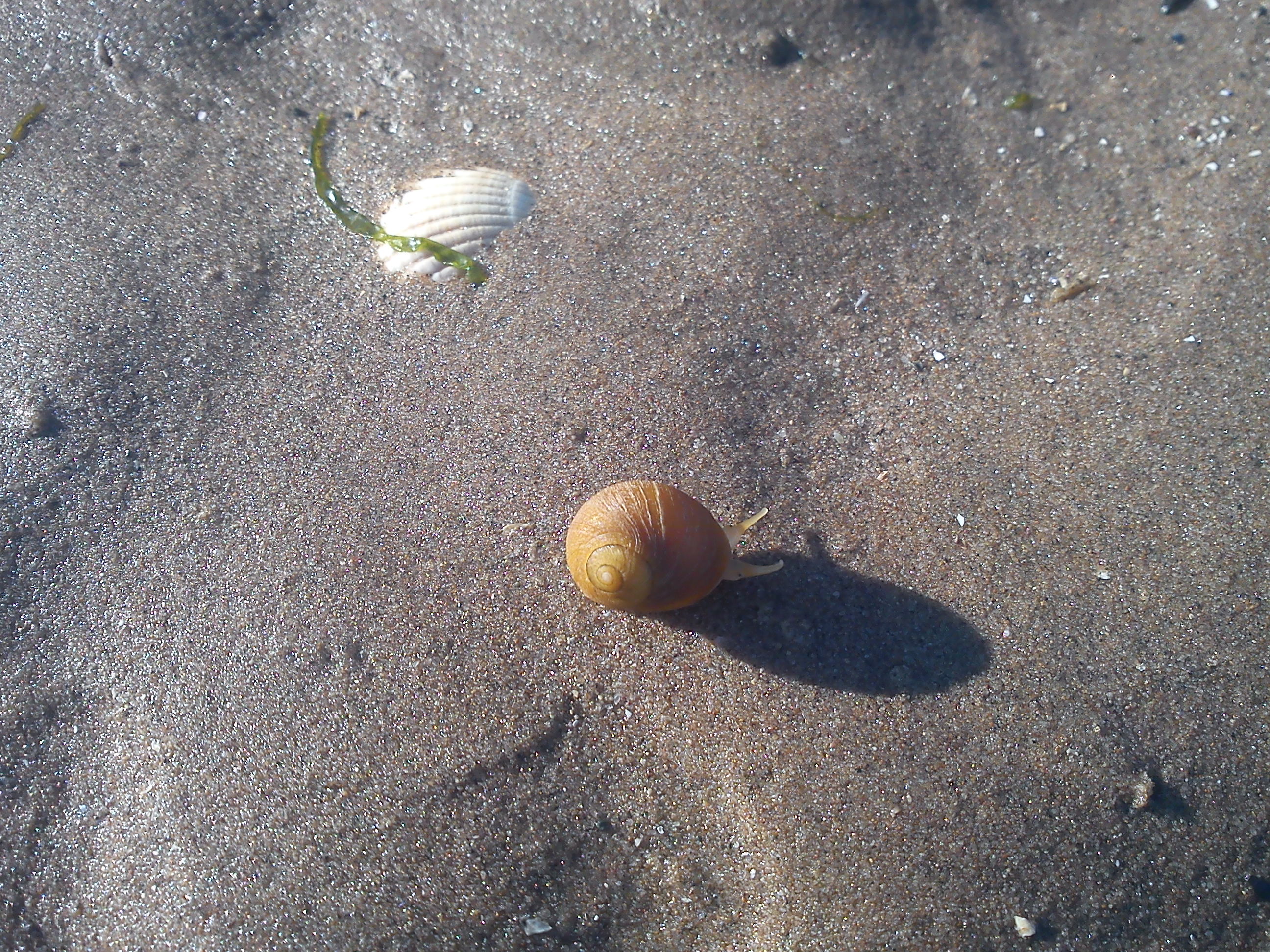
• Scorpions and Sea-Lords – Philip’s Guide to Seashells, A.P.H. Oliver, illustrated by James Nicholls (various)

• Spike-U-Like – The Cactus Handbook, Erik Haustein, translated by Pamela Marwood (Cathay Books 1988)

• Glasguitargang – Dog Eat Dog: A Story of Survival, Struggle and Triumph by the Man Who Put AC/DC on the World Stage, Michael Browning (Allen & Unwin 2014)


Or Read a Review at Random: RaRaR
Oneiric Ocean

20000-leagues-under-the-sea


I like this illustration of a scene in Jules Vernes’s Twenty Thousand Leagues Under the Sea (1870) even more because it has at least one mistake in it. At least, I think it’s a mistake: the jellyfish on the upper left are two Portuguese men-o’-war (really colonial hydrozoans, not jellyfish). They have gas-filled float-bladders, so in reality you see them only on the surface, not hanging in midwater like that. The mistake makes the scene like a dream. The absence of colour is good too: it fixes the illustration firmly in the past and the colours you imagine are more vivid. The artist is imagining, dreaming, conjuring a vision of an oneiric ocean.

He Say, He Sigh, He Sow #39

— Croyez-vous aux idées dangereuses ?
— Qu’entendez-vous par là ?
— Croyez-vous que certaines idées soient aussi dangereuses pour certains esprits que le poison pour le corps ?
— Mais, oui, peut-être.

  Guy de Maupassant, « Divorce » (1888)


“Do you believe in dangerous ideas?”
“What do you mean by that?”
“Do you believe that certain ideas are as dangerous for some minds as poison is for the body?”
“Well, yes, perhaps.”

De Pluribus Unum

A beautifully subtle puzzle:

Scrambled Box Tops

Imagine you have three boxes, one containing two black marbles, one containing two white marbles, and the third, one black and one white marble. The boxes are labelled according to their contents — BB, WW, and BW — but someone has switched the labels so that every box is now incorrectly labelled. You are allowed to take one marble at a time out of any box, without looking inside, and by this process of sampling you are to determine the contents of all three boxes. What is the smallest number of drawings needed to do this? — Martin Gardner, Mathematical Puzzles and Diversions (1959), chapter 3, “Nine Problems”, #5.

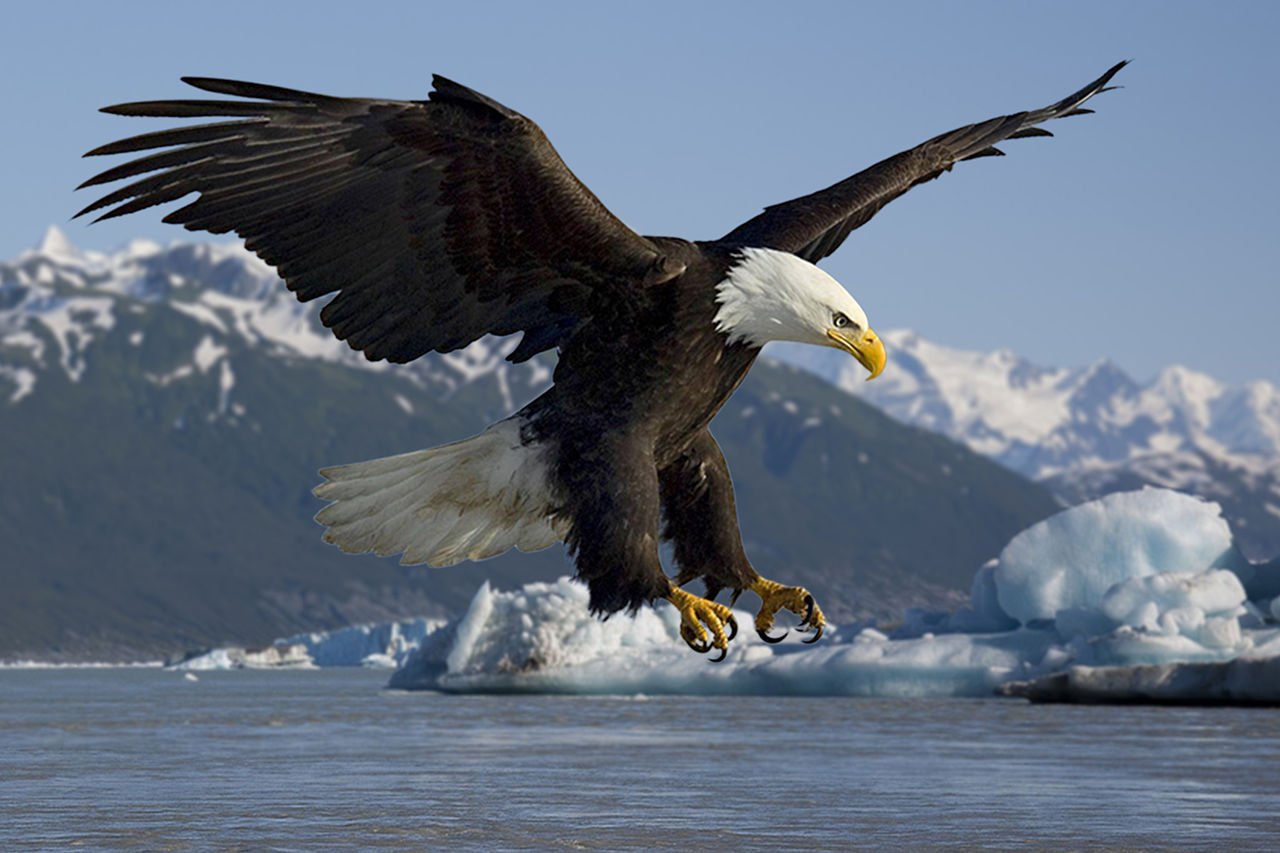
Bald eagle, Haliaeetus leucocephalus (Linnaeus 1776)

Bald eagle, Haliaeetus leucocephalus (Linnaeus 1776)

Answer: You can learn the contents of all three boxes by drawing just one marble. The key to the solution is your knowledge that the labels on all three boxes are incorrect. You must draw a marble from the box labelled “black-white”. Assume that the marble drawn is black. You know then that the other marble in the box must be black also, otherwise the label on the box would be correct. Since you have now identified the box containing two black marbles, you can tell at once the contents of the box labelled “white-white”: you know it cannot contain two white marbles, because its label has to be wrong; it cannot contain two black marbles, because you have identified that box; therefore it must contain one black and one white marble. The third box, of course, must then be the one containing two white marbles. You can solve the puzzle by the same reasoning if the marble you draw from the “black-white” box happens to be white instead of black.

Performativizing Papyrocentricity #50

Papyrocentric Performativity Presents:

• Life Locomotes – Restless Creatures: The Story of Life in Ten Movements, Matt Wilkinson (Icon 2016)

• Heart of the Mother – Journey to the Centre of the Earth: A Scientific Exploration into the Heart of Our Planet, David Whitehouse (Weidenfeld & Nicolson 2015)

• Lepidopterobibliophilia – British Butterflies: A History in Books, David Dunbar (The British Library 2012)

• Minimal Manual – Georgisch Wörterbuch, Michael Jelden (Buske 2016)


Or Read a Review at Random: RaRaR